Music has magical powers. Each 'raga' of classical music has unique abilities --- to soothe the mind, to invigorate us and to bring rain, fire or storm. Music is divine, transcending boundaries it takes us to completely different world.
On the day of the performance of Tansen, the hall was packed with courtiers and royal guests. People had come from far and near to hear the concert.
Tansen was waiting with his tampura in hand and as soon as the Emperor entered and sat on the throne, the great musician began alap - the first portion of a raga. As he sang on, the surrounding air got warmer and warmer. The audience started perspiring. Leaves and flowers in the garden dried and fell to the ground. Water in the fountains began to boil. Birds flew away in fright. The unlit lamps on the walls lighted up mysteriously and flames appeared in the air. People fled the court in terror while the fire generated by the raga raged on, burning the curtains to cinder. As the emperor got up and stood listening with awe, the rose that he often held in his hand drooped and died.
Now Tansen's body was hot and feverish but, absorbed in Rag Deepak, he continued to sing vigorously. Such was the power of Rag Deepak, rightly named after 'flame' … the raga that brought fire on rendition.
Music is truly magical, every tune, every tone, every note… all sending across the right vibes to soothe the nerves. It emerges as the most powerful medicine of all, as well as the best form of entertainment.
There once existed ragas that could do miracles like Rag Deepak. History has it that the flames of the raga were supposedly doused by yet another raga, Megh Malhar. As the name suggests, Megh Malhar gathered up the clouds and it rained! While up north it is known so, in South Indian style of classical music, it is known as Amrithavarshini.
This rare talent to do magic with ragas is called 'nada siddhi' in Sanskrit. “It’s almost lost… dead with the first generation of Tansen’s disciples,” says Radhe, an ardent patriarch of music, who also owns plenty of blogs and websites of classical music downloads. “It has lost its fervour but one cannot say that it is a lost art, for it does exist in various other forms, sung in different styles,” she concludes.
Ragas can be really mysterious. There are different ragas in Indian music and each raga creates a different mood. A raga can make you so happy that you may want to dance or it can make you so sad that it brings tears to your eyes. Besides performing in the court, Tansen is believed to have often sung alone for Emperor Akbar. At night he sang ragas that would soothe and help Akbar fall asleep and in the morning Tansen sang special ragas that would gently awaken the Emperor.
“Only traces of those melodies exist in the present world of remixed and mirch-masala music. Carnatic music itself has very few followers these days,” complains S Padmavathy, a renowned musician from Chennai. Rakesh, a young singer, also feels the same. “Music is so powerful,” he says; “Unfortunately, only a few realise its potential.” Music can be such a good healer. “No intake of medicines, no side effects, no expenses… Just a leisurely day and a good old tape recorder. That’s what music therapy is all about,” says Ragini, who runs a music therapy centre. “There is a raga for every situation, every condition,” she says.
“Ragas really are therapeutic. Call them magical if you wish to, but they do have the powers to bring rain and fire. However, it is all in the singing that they manifest their true powers. All the musical exponents I’ve known believe that if properly sung, these ragas really do work wonders. The musician must really be extraordinarily brilliant and devoted to music for this to happen,” opines Archana, a singer.
The ragas are full of unexplored beauty, mystique and depth --- something utterly magical. Yet another powerful raga is Yaman. It is a veritable ocean - fathomless, horizonless, tranquil, full of dignity and repose. “What we musicians play is only the tip of its musical iceberg. Yaman is a raga for every mood, every ras, every situation. It is unmistakably the one raga that serves as a divine channel for communicating with God,” says Radhe.
Raga Darbari works its magic with the help of minutely flattened intervals recalling the harmonic ambience of the blues. It is a deeply moving, emotionally intense raga with enough detail and nuance to repay repeated listening. Raga Darbari is like, what we say, a dialect of the original raga of Tansen. Many such mystic ragas are ascribed to Tansen. Ragas like Mian ki Malhar, Mian ki Todi and Darbari Kanada are the most famous and are existent today too.
Says Rakesh, a finalist of the Superstar Global, a reality-come-musical talent hunt: “I think there exists a world which truly is unknown for a normal human being here, on earth... some call it the spiritual presence or the omnipresent force. Music promotes positive energy to that force. This is not only done by the singer but also by the listeners.”
“I think it is this positive energy that is reflected as rain or fire. Nowadays, there are not enough aspirants to sing those ragas with 100 per cent efficiency and there are no spirited listeners who appreciate great music. All these account for the absence of miracles.”
“Like fables and folklore, these musical wonders have changed through time. No one knows the ancient real McCoy but it still goes down generations with personal touches and changes. No one can bring rain or create fire anymore… It happens only in stories of the great Tansen,”concludes Shravan, a music composer.
Regarding why the Beatles broke up, for years, I was a member of the “Yoko Is Evil” sect. Then for a while I converted to Paul-is-an-Egomaniac-ism. I took it for granted that the truth lay somewhere within these two camps. Eventually I realized the many other factors: John Lennon’s addiction to heroin; the death of the Beatles manager Brian Epstein; their music and individual talents getting too big to be contained within one album; George Harrison’s waning interest in traditional western pop music.
Part of the reason for Harrison’s change of direction was his growing passion for Indian music, philosophy and eventually religion. Recently I have myself become immersed in a faith which relies heavily on the Hindu worldview regarding reincarnation, karma, “Hell” as distance from God rather than a literal lake of fire. I feel my years of Beatles fandom was just a way to get me across that spiritual bridge.
Whenever I meditate on a worldly desire and make a vow to do, or not do any given thing, if I later fall back on that vow, I find that I do face consequences of my action. It’s Karma, its Natural Law, the Law of Truth, whatever you want to call it. A dharma (religious duty) of Hinduism, Christianity and all major religions really is “Do not bear false witness” with an implied “or else…” involved. Mohandas Gandhi wrote of this concept in depth in his “Autobiography.”
In 1967, the rest of the Beatles willingly accompanied Harrison to Wales for a weekend seminar on Transcendental Meditation, and to India the following spring for an extended course. Though the course did not make religious faith a priority, there is always an aspect of spirituality with meditation, and where there is spirituality, there is a connection with God on one level or another. Whether one accepts it or not, that door is opened at that time. The importance of the Law of Truth is, hence, heightened.
Before the Wales seminar, the Beatles were on top of the world having just released Sgt. Pepper’s Lonely Hearts Club Band and the single “All You Need Is Love” that summer. They were the voice of the youth movement. What happened?
Two of the Beatles’ best-known songs are “Can’t Buy Me Love” and “All You Need Is Love”. Could the Beatles have written, recorded and performed these songs for profit, all the while living the lavish and, lets face it, decadent lifestyles they did without Karma rearing its ugly head?
While they were at the Wales seminar, their manager died. But things still seemed good six months later when they left for India. While in India, John Lennon flirted with the idea that their next move as a band should be to become “spiritual leaders.” For the course, they were to give up all non-prescription drugs for mental clarity. But none of them gave up smoking pot and once they got back from India John went back to LSD and soon started using heroin. Even George never gave up his rock star lifestyle while scolding other rich people in a song called “Piggies.”
Even though they wrote about 40 songs in India the following spring and seemed to be very together, as soon as they got back from India, everything seemed to fall apart rapidly. From the beginning of the
White Album
sessions in May 1968 there were bitter arguments. This was followed by Yoko entering the picture, a bitter struggle for power in the band, and a very bitter court battle which eventually tore the band asunder.
Was Yoko’s presence a catalyst to bring on the negative Karma the Beatles collected through their non-adherence to the law of Truth? What about the death of Brian Epstein? Another example of Karmic retribution on the band? Surely not as their Karma should not have dragged Brian and his very life into it. It may have been Karma from past incarnations that caused them to have to go through such a tragedy together, but that is a different story. The disaster of Apple Corps., and the resulting lawsuits over money which ended the Beatles, however, seem like fitting Karmic retribution for years of singing about love being more important than money, all the while making money and lifestyle the most important thing in reality. And Lennon must have known it, as one of his first solo singles was “Instant Karma, where he sang “Instant Karma’s gonna get you” and “we all shine on”, meaning “we all have to live with the consequences of our actions, so be careful.” Indeed, his band had fallen mightily from grace.
We talk about the spirituality in music here at RockOm but lately I've been thinking - isn't the meaning less inherent in the music and more projected on to it by our own minds? Sure, there was the author's original intent to perhaps share a truth, reflect upon a theme or dedicate a piece of music to a higher power. But like anything in life - a thought, a relationship, an object in the room - doesn't what we perceive in anything say less about the object itself and more about the mind that is "seeing" it? Cannot two separate people hear the same song, the more spiritually-minded person gleaning meaning in what the person standing next to her does not?
Perhaps RockOm, then, is a place for like-minded people who choose to have the
shared experience
of finding and searching for a depth and spirituality in music. Is the spirituality inherently there? Maybe. But if the previous paragraph holds any truth, then that's questionable. It is what it is; we put the meaning in it.
This site certainly celebrates the artists that are about infusing depth and spirituality into their music - be it intentionally or that which is just a byproduct of their personal lives and preferences. But even then cannot we only see in those artists' music what our conditioning and experience allows us?
What's all this to say? Hell, I don't know... just wondering out loud, I suppose. Your thoughts on all this?
Love is in the air - this is what I love about spring! There’s a twinkle in the eye and a mischievous little smile caught on the lips of men and women throughout the world when this rhythm of life comes rolling into town.
When I set out to make this album (
Seasons
, of which this week's song "Jukebox" is a part) I did not have love in my life; the walls might have been crumbling and in disrepair but they still screamed “Stay Out! Danger! Do Not Enter!” to anyone who might have wanted to poke their head in and have a curious look about. I didn’t really know what the “Spring” record was going to sound like or how it was going to feel and I most certainly didn’t think that I would be falling in love myself while I wrote and recorded it but that was exactly what ended up happening. I met an incredible young woman I had been working with at a restaurant in Vancouver and tumbled head over heels for her even though, in my mind, I thought it was far too risky and difficult a relationship to explore.
But that’s the wonder and power of love – you don’t get to decide with your mind who or when or why or where or how it’s going to happen; it just hits you like a bolt of lightning and leaves you trembling helpless in your boots. It weaves and winds its way through your heart, dragging you up the highest of mountains before pulling you down through the lowest of the lowest valleys. Love races you along through moments of life at breakneck speeds one minute before slamming on the brakes, inching nearly motionless through time until you’re so sick from waiting that you cannot take it any longer at which point it forces you to wait even longer in hopes that it might teach you the patience needed to find your strength and focus your will for another harrowing adventure of passion and pain that’s sure to lay on the road ahead. Yes indeed, love is a crazy and powerful muse.
I didn’t want to fall in love with Ames because I knew she was from England and would be leaving Canada soon and keep trying to convince myself that an arrangement like that could/would never work. But by that point it was way, way out of my control. It was only by accepting the fact that love cannot be controlled that finally enabled me to step out from behind my walls and let love truly find my heart and penetrate my soul; and I’m so glad that I did. I’m grateful every day that from that moment our eyes first met a seed was planted deep within the heart of the universe; a new life born with a destiny to grow and flourish in the world despite the odds and despite any attempts by us or anyone else to extinguish the force of its mission. I also don’t regret that I tried my best at the time to fight it because I can see that the force I was so busy resisting then is the same force that now keeps us drawn so closely together; a tool of the gods used to remind us of the respect and admiration we share for one another during the times we’ve had to endure the agony of excruciatingly extended times apart.
Certainly it’s not always smooth sailing across these waters – we all know life only works like that in movies and sappy love songs ;). However, I have learned these past two years that the only real fight worth fighting for is the Battle of The Lovers – an epic journey to nurture and protect the sacred force that draws a positive light around two souls and tirelessly seeks to unite them together.
The only fight worth watching is the fight on earth for love.
Char Butler, this week's RockOm Featured Artist (see right hand column) understands the healing properties found in music. In fact Char says, "Behind the music I hope that the tones raise each individual's vibrations that are essential in healing." How often it is that we're simply "off vibration" not feeling the "vibes"? We can begin to let the music re-calibrate our being as soon as we become still and let the music flow through us.
"The older I became and went on my way
Wisdom came forth from my Father's voice
The words he spoke were heeded the most
Kindness and patience deliver you whole"
[From "My Life" by Char Butler]
It seems we're seldom patient or heeding of the vibration and inner words speaking the entire, silent truth. How fortunate we have each other here to remind us of what is real and unreal. There is no finer way of relaying this healing presence and becoming re-tuned to universal vibration, all that is real, than through music.
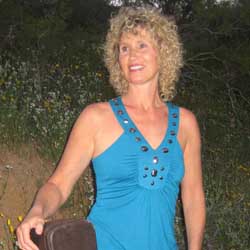
Char Butler is a former opera vocalist and guitar instructor turned singer-songwriter from Queen Creek, Arizona with a unique style and vision for her music. Voted 2008's Crossover Artist of The Year by
New Music Weekly Magazine
, Char says, "I totally believe in transcending positive thought. I write songs that express love, hope, peace, misunderstanding, loss and healing. I write songs about spirits, which I believe are among us and upbeat songs that have positive words put to a soft rock beat." Experiencing loss throughout Char's life has indeed influenced her writing style. Her strong Christian belief system has taught Char that every action has a recourse and that all situations - may they be losses or successes - give insight and wisdom if one is willing to seek understanding. Char's healing music is being used in ICU hospital recovery units, massage clinics, yoga classes, as well as utilized for stress management. Additionally, several of the songs on her album
Secrets of The Heart
are referring to the invisible realm and the veil that exists between reality and the spiritual realm.
Featured Track:
"My Life"
"'My Life' is a story song from
Secrets of The Heart
written about stages in my own life from infancy to adulthood. It mentions my mother, father, angels and my husband. I wrote this song in the early 80's and [have since] changed the lyrics slightly to be intriguing, but the overall message was to say thanks to my loved ones." (Char Butler)
Springtime and Easter are times of the year that invite us to reflect on new life and fresh beginnings. With that in mind, there are no doubt old albums in your collection that you once enjoyed very much but for whatever reason (you grew out of a phase, grew sick of them or now have an undesirable association with them), you've since buried the dead albums in the back of your CD case. Once beloved pieces of music, your old discs or LPs now sit postmortem, collecting dust, and completely forgotten.
As an experiment this week, pull one of those "deceased" albums out and give it a full listen (ex. on your commute to or from work or while doing some housework). See if you can recapture what you once enjoyed about it or better yet, see if it has a new life or new meaning for you in its now resurrected state. We're usually always so preoccupied with finding new, undiscovered music to enjoy that we miss the treasures that can be found right beneath our noses.
[Did you try it? Share your experiment results (and which album it was) in the comments!]
(
NaturalNews
) Natural health doesn't only encompass exercise and nutrition. A new study by UK scientists from Imperial College London, the University of Birmingham and other institutions just published in the journal Proceedings of the National Academy of Science demonstrates sound can be used to facilitate healing. By listening to their favorite music, stroke patients with impaired vision were able to see better.
According to the American Heart Association, stroke is a leading cause of serious, long-term disability in the United States. Around 60 percent of stroke patients have impaired visual awareness, known as "visual neglect", as a result of damage from a stroke in parts of the brain that control vision, attention and action. The result of visual neglect is a loss of awareness of objects in the side of space opposite to the side of the brain that was injured. For instance, if a stroke occurs in the right hemisphere of the brain, a person tends to lose awareness of visual information in the left side of space.
"Visual neglect can be a very distressing condition for stroke patients. It has a big effect on their day-to-day lives. For example, in extreme cases, patients with visual neglect may eat only the food on the right side of their plate, or shave only half of their face, thus failing to react to certain objects in the environment," Dr. David Soto, the lead author of the study from the Division of Neurosciences and Mental Health at Imperial College London, said in a statement to media.
Researchers studied three patients who had lost awareness of half of their field of vision as a result of a stroke. The research subjects completed tasks while listening to their favorite music, while listening to music they didn't like at all, and in silence. The result? All three were able to identify shapes and red lights in their stroke-impaired side of vision much more accurately while they were listening to music they liked than while listening to music they didn't like or while performing the tasks in silence.
For part of the research, patients were told to press a button when they saw a red light. One research subject could point out the light in 65 percent of cases while he was listening to favorite music, but he only perceived the light 15 percent of the time when there was no music or music he didn't like was played.
What caused the improvement in visual awareness seen in these patients? The researchers think it could be a result of the research subjects experiencing positive emotions when listening to favorite music. The scientists looked at functional MRI scans to see how the patients' brains functioned during the different tasks. They found that when tasks were performed to pleasant music, areas in the brain linked to positive emotional responses from stimuli were activated. At the same time, the patients' awareness of the visual world was improved.
"We wanted to see if music would improve visual awareness in these patients by influencing the individual's emotional state. Our results are very promising, although we would like to look at a much larger group of patients with visual neglect and with other neuropsychological impairments. Our findings suggest that we should think more carefully about the individual emotional factors in patients with visual neglect and in other neurological patients following a stroke," Dr. Soto stated in the press release. "Music appears to improve awareness because of its positive emotional effect on the patient, so similar beneficial effects may also be gained by making the patient happy in other ways. This is something we are keen to investigate further."
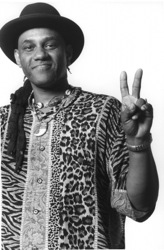
“It’s not so much brand new blues as it is brand new grooves.” So says Cyril Neville when asked to describe his new CD entitled
Brand New Blues
released April 7th on M.C. Records. It’s been eight years since his last release and
Brand New Blues
marks a distinctive departure from previous efforts.
The new album contains mostly original material written or co-written by Neville with the perspective of an outspoken human rights advocate.
Brand New Blues
is a musical gumbo containing a lifetime of musical influences & passions and spans the genres of blues, funk and soul. Brian J (of Pimps of Joytime) took care of the production chores and played most of the instruments while family and friends gathered to help Neville achieve his vision including Art Neville (Organ & Vocals), Ivan Neville (Organ), Ian Neville (Guitar), Tab Benoit (Guitar), Waylon Thibodeaux (Washboard) and Jumpin' Johnny Sansone on harmonica. The sessions were recorded in Brooklyn NY, Austin TX, Houma LA & New Orleans LA.
Cyril Neville is the youngest of the famed Neville Brothers and has made his own unique mark within the music industry with his distinctive style of music and his vision in serving and giving back to others. He does the latter primarily through a lifetime of service within the New Orleans’ community and through work with such causes as Amnesty International and wetlands conservation in Louisiana.
Cyril began singing professionally at 19 in 1967 and released his first single in 1970. He was the vocalist and conga player for the influential and successful band The Meters and contributed to two releases and a tour opening for the Rolling Stones (the Stones specifically stated that if Neville had not been a part of the Meters, they wouldn't have been asked). In addition to his work with the Neville Brothers, Cyril has formed other bands over the years including the Endangered Species Band in 1983 and the Uptown All-stars Band. Neville also found time to launch his own record label, Endangered Species, and founded the New Orleans Musicians Organized (NOMO), which helps musicians needing business advice with their careers.
Neville has issued several solo albums on his own including 1995's
The Fire This Time
and a pair in 2000,
New Orleans Cookin'
and
Soulo
. In addition he has guest performed on various other artists’ recordings over the years including albums by Edie Brickell, Jimmy Buffett, Dr. John, Bob Dylan, Daniel Lanois, Willie Nelson, Tab Benoit, and Big Chief Monk Boudreaux among others.
Tom: Tell me about Brand New Blues. What inspired the album and how are the blues brand new for you?
Cyril: Well actually it’s just brand new grooves put to blues lyrics in one sense. And we also did some traditional blues but we did it our own way. It basically came out the way it came out because of my friend Brian J who has a group called The Pimps of Joytime. He’s from Brooklyn, but I met him about 15 years ago in New Orleans where he was playing on the street in the French Quarter. I was working on a project that I had told a friend of mine I needed some help with. He said, “Man there’s a guy I’ve been playing with who is a one man band, he plays everything.” So basically the majority of the music that you hear on here is Brian J with the exception of Art Neville, Ivan Neville, Ian Neville, and Tab Benoit and [Jumpin’ Johnny Sansome on] the harmonica. Everything else: drums, bass, guitar, background vocals and some of the percussion is Brian J. We’ve worked together on a few other things before but this was definitely a labor love for both of us and we’ve been wanting to work on something special for some time. So when I decided to do a blues record he was one of the first people I called. So basically I sent him some lyrics, he put some music to the lyrics; he sent me some music, I put some lyrics to the music. Then we got together in Austin and we fleshed the project out. He took it back to Brooklyn, to his laboratory, put the finishing touches on it, and then brought it to New Orleans, got Art and them on it, brought it to the home of Louisiana and got Tab Benoit and the rest of the guys on it. Waylon Thibodeaux is playing the washboard, Jumpin’ Johnny Sansome is playing harmonica and Tab is playing guitar. Basically that’s how we came up with this musical Gumbo. Both of us have a great love not only for the blues, but for New Orleans at the same time. So that’s how it happened.
Tom: I’m loving the reggae infusion you’ve pumped into Brand New Blues (on M.C. Records, I should mention). How are blues and reggae similar and how do they differ?
Cyril: I was blessed to have traveled several tours with Ziggy Marley and the Melody Makers when we were all young. I got to know the Marley family and saw that there were a lot of similarities in their lives and the people in New Orleans – food wise, spirituality, music, the whole 9 yards. It’s well documented that reggae music and the musicians in Jamaica were influenced by the music of New Orleans. I think Fats Domino went down there in the 50s and I guess that kinda turned things around too.
I had a band called The Uptown Allstars and we invented what we called Second Line Reggae. That’s where we learned all of the grooves the way the cats did them in Jamaica and then we put a New Orleans twist on it thanks to Mean Willie Green’s bass drum and his attitude. We called it Second Line Reggae because we didn’t want to just be repeating what someone else was doing but taking the stuff a few light years further, like they did with our music. We used to begin our shows by saying that we thought that New Orleans was not only the southern most point of America but the Northern most point of the Caribbean and that there were more similarities than differences between a black man in Jamaica and a black man in New Orleans. The thought that I have of it is that we do what we do for the same reasons – we don’t play music as a means of making a living. It’s a way of life.
Tom: In your liner notes you thank “The Great Spirit who moves through all things for life.” Is Brand New Blues a spiritual album and is there an essence of spirituality infused into it?
Cyril: Well everything I do has spiritual overtones to it. That is what I live for and how I live. Last October 10th I made 60 years old. In regulation years I’m 60 years old but in actuality I’m 120 because of the amount of stress that goes with being an African-American in a white supremist society. Also coming up in New Orleans I think you can add a year and a half onto each year. I’m saying it and joking with it but it’s actually the truth, man! There’s no way of describing what it’s like growing up black if you ain’t. It’s hard to understand it. I say that because I know that the reason I’m speaking to you right now is because of the love the Great Spirit has for me and that this gift of song that I have come directly from that. There must’ve been a reason that the Great Spirit put this gift in me. So every time I see injustice I have to put it into a song. That’s one of the things I loved about reggae music was the beautiful lilting melodies wrapped around those hard personal experiences – like “Slave Driver,” “Three o’clock Roadblock,” and “Them Belly Full but We Hungry.” Peter Tosh, Bunny Wailer, and Bob Marley were all three prophets in their own rights, working for a job, working for the Holy Spirit and that’s basically the way I am.
Tom: What do you say to white folks like me who love the blues and reggae and who don’t know anything about being black, who can’t understand because we weren’t raised in the black experience and yet we love the music and realize the spirituality in it?
Cyril: There’s really only one race on this planet and that’s the human race. What comes from the heart and from the soul goes straight to the heart and to the soul. So it’s like me riding in my dad’s taxi cab with him asking him why he was listening to this hillbilly music; he was listening to country and western. Because you listen to it and you learn something about the people who were singing it. That’s their blues. So I started listening more closely to what Hank Williams and some of those other guys were talking about. I saw it for what it was worth. I realized it was the same type of feelings, the same experiences but it was just from two different sides of the tracks. But it’s all basically coming from the same spirit. Loneliness is loneliness no matter what color your skin is. All of this skin stuff is a game someone invented to control people’s minds and actions.
The Blues cuts through age, through color, through all of that man. I’ve been on two Blues Cruises and I’ve not ever had that much fun in my life. Looking out in the audience I see people from all creeds, colors and genres. That’s the most beautiful thing in the world.
Tom: You’ve been an advocate for human rights with Amnesty International and have worked to conserve the wetlands in Louisiana. Would you be the same person you are today had you not become involved in these efforts?
Cyril: Yes, because I was doing all those thing before we ever heard of Amnesty International. There was a constant struggle going on in my hometown - a struggle for life. My whole thing is centered in the community that I come from. This thing called the Mardi Gras Indians is basically what saved my life. My uncle was the chief of the Mardi Gras Indian tribe called The Wild Chapatulas. The first Neville Brothers record was really the first Capatulas record because that was the first time we were all in the studio together. It was not only the Neville Brothers and my uncle Jolly but the musicians were The Meters, who came from the same neighborhood. That whole thing is very spiritual and it’s been compared to secret societies, African culture and Native American culture. It’s something that when I was growing up that you knew was not the same as the Mardi Gras floats and the people with the masks throwing things from them. This was something closer to the earth, closer to being real, closer to you who you were.
Cyril goes on to explain in detail more about Native American history, Mardi Gras, Hurricane Katrina and the aftermath and more. Hear the full interview on the April 9th Episode of the
RockOm podcast
.
Tom: New Orleans is different now as compared to six or seven years ago. When you play your new music there, there’s got to be some kind of celebration in your being there and your performing new music there.
Cyril: I celebrate being from there every time I open my mouth. I celebrate being from New Orleans. That’s the air that I still breathe. When I dream, I dream New Orleans. So I wrote a song about it called “I Got the Blues for New Orleans” which I did with the Voice of the Wetland All-stars. There’s also another song that Allen Toussaint and I wrote called “A Box of Pictures” about how who will believe that just in a matter of minutes everything that you hold dear will just be gone. All that’s left, luckily, is a box of pictures. That’s what a lot of people ended up with [after Katrina] – and some people didn’t even get that. And so I’m writing about a lot of this stuff and it’s therapeutic, I’ll tell you that; it’s healing. Because I do love New Orleans so.
A new, exclusive
interview with Cyril Neville
, of the famed Neville Brothers, whose album
Brand New Blues
was released on Tuesday. Cyril spoke with RockOm about his new album, how race relates to music, and his connection with his beloved New Orleans.
A new episode of the
RockOm podcast
is out today and includes interviews with our Track of the Week artist, Adaline, as well as the raw, unedited audio of our interview with Mr. Neville.

 We talk about the spirituality in music here at RockOm but lately I've been thinking - isn't the meaning less inherent in the music and more projected on to it by our own minds? Sure, there was the author's original intent to perhaps share a truth, reflect upon a theme or dedicate a piece of music to a higher power. But like anything in life - a thought, a relationship, an object in the room - doesn't what we perceive in anything say less about the object itself and more about the mind that is "seeing" it? Cannot two separate people hear the same song, the more spiritually-minded person gleaning meaning in what the person standing next to her does not?
 Springtime and Easter are times of the year that invite us to reflect on new life and fresh beginnings. With that in mind, there are no doubt old albums in your collection that you once enjoyed very much but for whatever reason (you grew out of a phase, grew sick of them or now have an undesirable association with them), you've since buried the dead albums in the back of your CD case. Once beloved pieces of music, your old discs or LPs now sit postmortem, collecting dust, and completely forgotten.
 (
 “It’s not so much brand new blues as it is brand new grooves.” So says Cyril Neville when asked to describe his new CD entitled
Brand New Blues
released April 7th on M.C. Records. It’s been eight years since his last release and
Brand New Blues
marks a distinctive departure from previous efforts.

 Email Us!
 RockOm RSS Feed
 RockOm Facebook
 RockOm MySpace
 RockOm Twitter
 RockOm YouTube
 RockOm Viddler


