viagra online ordering viagra online without a prescription

Posts Tagged ‘Church’

Jazz Spirituality

Wednesday, February 25th, 2009

Reflections on a Theme
By Pastor Bob Cornwell
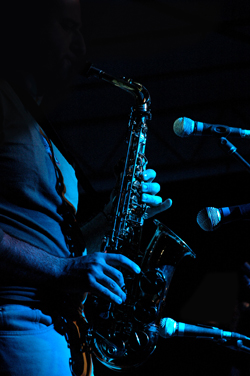
Blue Jazz I love jazz! I'm listening to Coltrane and Monk as I write. It is an idiom that is dynamic and innovative. It takes from the past and reinvents it. Coltrane, Monk, Davis, Rollins, Brubeck, Desmond, just to name a few who have blessed us with music that is unforgettable and challenging.

This morning I spent time with my minister of music -- who is a master of the organ and the piano, and willing to go where the Spirit is leading us as a congregation -- and the representative of a company that builds and rebuilds pipe organs. Our organ, which dates back to 1928, though only the console and half the ranks of pipes remains from what was one of the grand church organs of Detroit. It is in need of something to be determined. Our hope (our minister of music and me) is that what emerges from this effort is an instrument that is versatile enough that it will support a truly modern or contemporary worship -- not contemporary in the sense of a praise band (though I'm not averse to having one) but a worship that is expansive enough that we can include and embrace the full spectrum of musical expression. One of those expressions I do hope to include is jazz -- in part because I love jazz, but also because it offers so much to us.

In a brief essay for the Transforming Theology blog, Thomas Reynolds of Emmanuel College, Toronto, reflects on jazz and spirituality. He explores the dimensions of jazz and the way in which it can enliven and enrich not only worship but the very theological efforts that we undertake together. He suggests three dimensions of jazz that can open up theology and transform it.

In the first place he suggests that jazz is " dynamic , restless and searching." Dynamism -- yes -- after all the word dynamism derives from the Greek for power. There is power in jazz, and its a power that allows us to break free of convention: "the musician deliberately seeks to break free from constraining mechanisms in order to pry open a passageway to something more, to new forms of variation and novelty."

Secondly, he suggests that jazz has a " relational content ." Yes, the jazz soloist is an individual, but that individual needs the rest of the band to accomplish this effort.

While the improviser gives voice to his or her own unique interpretation of the music, this is only possible in the incubator of what drummer Art Taylor calls “the jazz brotherhood.” Like Christianity and other spiritual heritages, jazz has its tradition. A collective consciousness indwells the jazz musician.

Finally, jazz has a sense of " openness ." It requires letting go, letting things happen as they will, even if that means making mistakes (and then integrating the mistakes).

Such letting go entails risk, and thus requires courage. For things could become undone; mistakes could be made. But the improviser moves forward nonetheless, perhaps even transforming mistakes into new possibilities. Space for error is required if space for creative advancement is also to exist.

Yes, there is need for decency and order in worship -- as Paul would have it -- but there is also a need for some rhythm and some blues and some joy and some syncopation. Yes, there is a place for jazz in our spirituality -- if only we're open to the journey!

About Pastor Bob Cornwell : Bob is pastor of Central Woodward Christian Church (Disciples of Christ) of Troy, Michigan who also serves as editor of Sharing the Practice (Academy of Parish Clergy).

Like Mavis Staples says:
‘It’s all God’s music’

Wednesday, February 18th, 2009

By Mark Hinson, Tallahassee Democrat

It's the voice. That husky contralto that packs so much depth and authority. It'll stop you cold.

Mavis Staples suddenly burst into song when she started talking excitedly about recording her jaw-dropping 2007 album We'll Never Turn Back with producer-guitarist Ry Cooder. "Ry didn't want do it (record 'Jesus Is On the Main Line') so I just started singing while he had his back turned and was tuning his guitar," Staples said before she started belting the opening lines of the gospel standard. "Jesus is on that mainline, tell him what you want," Staples sang over the phone. "Jesus is on that mainline, tell him what you want... You've gotta call him up and tell him what you want."

Staples brought her unmistakable voice — which has only gotten more commanding with age — to Tallahassee, FL this past week when she kicked off the marathon that is the Seven Days of Opening Nights arts festival. She shared the bill at Bethel AME Church with fellow gospel travelers The Blind Boys of Alabama, who won a Lifetime Achievement Grammy Award and another one for best gospel album of the year at this year's Grammy Awards.

In 2005, Staples also picked up a Lifetime Achievement Grammy for her work in the ground-breaking Staple Singers. The family singing group started performing in the pulpit before they crossed over into Top 40 radio in the '70s at Stax Records in Memphis, Tenn. Their 1972 No. 1 hit "I'll Take You There" raised a lot of eyebrows back at their church.

"They wanted us out of the church," Staples said. "They weren't listening to the lyrics. All they saw was the kids dancing to our song." Then Staples started singing again: "I know a place, ain't nobody cryin', ain't nobody worried, ain't no smilin' faces lyin' to the races."

Wow. It's really hard to concentrate when she does that. "We were talking about heaven," Staples said. "Where else could we be taking you but to heaven? They eventually invited us back to church. And when we got there, the first song they asked us to sing was 'I'll Take You There.' "

In the documentary Respect Yourself: The Stax Records Story (which takes its name from a Top 20 song by The Staples Singers), Staples made a very astute observation when she said: "The devil ain't got no music — it's all God's music." "I still believe that," Staples said. "It is all God's music." If Otis Redding was the superstar of Stax Records and Rufus Thomas was the comic relief and Isaac Hayes was the sex symbol, then The Staple Singers were the American institution's spiritual soul. "Lives were changed after you heard Mavis Staples," Stax co-owner Al Bell said in the documentary.

The Staples made a very memorable appearance at Wattstax, a massive concert held in the Los Angeles Coliseum in August 1972 as soul music's much funkier answer to Woodstock. Tickets cost $1 apiece.

"Originally we weren't booked to play Wattstax," Staples said. "We were working at the Sands in Las Vegas opening the show for Sammy Davis, Jr. We couldn't take off. Then Sammy shut the show down for one night to meet with Richard Nixon. You've probably seen that picture (of Nixon and Davis laughing it up onstage). We said, 'We don't have to work tonight, let's go to Wattstax.' It was so amazing. We'd never played in front of 100,000 people before. We played in the morning. Had chicken for lunch and then drove back to Las Vegas."

Unfortunately, bad business deals and mounting bank loans forced Stax to close its doors on McLemore Avenue in 1975. The famed studio, which was housed in an old movie theater, was bulldozed in 1989.

"That was so sad," Staples said. "I don't understand to this day how Memphis let this happen. All we had was a memory... Motown had all the cute stuff but Stax had the funk and the gut." A replica of the studio, called The Stax Museum of American Soul Music, was built on the same McLemore lot and opened in 2003.

Staples spent most of her solo career working with a variety of high-profile producers — Prince, Curtis Mayfield, Jerry Wexler, Bob Dylan, Steve Cropper and others. But Cooder has a special place in her heart. "I feel like ("We'll Never Turn Back") is the best album I've ever done," Staples said. "I'm really proud of that album. I've worked with a lot of geniuses but Ry Cooder is the elder genius."

The songs on "We'll Never Turn Back" were all culled from the Civil Rights era when folk music ruled the Earth. But the raw, stripped-down, gutbucket approach taken by Cooder and Staples sure doesn't sound like some old hippie folk singer strumming a sanitized version of, let's say, "Eyes on the Prize." Astonishingly, all the cuts on the disc were done on the first take.

"Usually, when I'm recording, I like to get a list of the songs the night before and rehearse them at the hotel before we get in the studio," Staples said. "But Ry kept the songs a secret until I got to the studio. He wanted to keep everything spontaneous. ... After I sang the first few songs, I went in and asked if we were ready to lay them down (on tracks). Ry said, 'They're already done.' And I said, 'I like the way you work.' "

Cooder also encouraged Staples to ad lib during the songs by telling stories about her visits to the Jim Crow South as a little girl. She also riffed about personal heroes such as her dad Pops Staples, gospel legend Mahalia Jackson and Martin Luther King Jr. The Staple Singers often warmed up the crowds with a few songs before King spoke in the '60s.

"When I was a little girl, I thought of him (King) as just one of Pops' friends," Staples said. "It was only after he was gone (that) I started realizing how great he really was." When asked how she liked to personally remember King, the singer was silent for a moment. "My fondest memory was his laughter," Staples said. "He looks so serious and so sad in pictures but he had this joyful laugh. We'd be on our way to a meeting or a rally and Dr. King would be standing in a circle with the rest of the men telling jokes and laughing. You could hear his laugh over all the rest of them."

Reprinted with permission

Every Sound is Music Now

Monday, January 5th, 2009

Wheat Blowing There is new evidence that our world’s youngest and brightest are redefining their spiritual lives according to new and exciting research conducted by the Minneapolis-based Search Institute. The Search Institute's Center for Spiritual Development in Childhood and Adolescence recently conducted a vast survey, believed to be the first of its kind, and uncovered some surprising finds. Some 55 percent of youths and young adults (ages 12 to 25) indicated they are more spiritual now than two years ago. But, surprisingly, nearly one-third of those responding don't trust organized religion. Most youth surveyed believe there is a spiritual dimension to life, and about one-third of youth surveyed see themselves as "very" or "pretty" spiritual.

The survey included 6,853 youth and young adults throughout the world who, when asked if they don’t feel spiritual in places of worship, where do they? Their responses, "Spending time in nature,” (top answer) and "Listening to or playing music," (number 2). “Attending religious services" was ninth on the list of the top 12 most-frequent answers.

Nature. I wonder if we “adults” are wise enough to grasp the implications of this youthful response where nature is concerned. Sure, what can be seen and felt in nature empirically holds spiritual significance, but how does what can be seen compare with what can be heard in nature? Nature is a realm of the purist and most honest music to be heard. As Emerson said, "Nature makes no noise. The howling storms, the rustling leaf, the pattering rain, are no disturbance; there is an essential and unexplored harmony in them... Every sound is music now... Each tree is a harp which resounds all night-though some have but a few leaves left to flutter & hum."

If we were to model our houses of worship and our religious and spiritual rituals on nature’s “unexplored harmony” instead of man-made dogma, allowing for only unfiltered light to shine on us all, what would the implications be and would our young people find refuge again, instead of doubt and hypocrisy? Our very brightest and best don’t trust what we’ve created, what we’ve insisted is sacrosanct and love-bound. What if we listened to our younger minds and allowed them to witness to us and embrace with them the natural elements of light and love?

Music. Are we, who are setting the agendas of our spiritual institutions, willing to finally listen to our young people? Listen to them and their music- not our music, but theirs? What are we saying to those young musicians and music lovers when we tell them certain music is or isn’t acceptable? What gives us the right to deny them music’s inherently spiritual nature just because we may find it not to our liking or not acceptable to what we’ve been told is some standard? We’ve shut ourselves off from our youth and music’s very sacredness itself through sheer audacity and a forgotten halcyon bravado from long ago (our own youths, maybe?) that’s long needed a jolt of veracity and which can put a jump back into the frailest of steps- if we simply give up our insistence that we know what’s best.

If we were to fashion our celebrations of enthusiasm (the word enthusiasm originates from the two words, "enthios" and "iasm", which translates to "the God within") and be reminded that “the kingdom is within” not without, how would our music be different and how would our spirituality be made richer? We are afraid to celebrate ourselves and “God within” because of all we’ve been taught through the ages by religious intuitions. Isn’t it time for music itself to be an institution in which we all can come, face to face again with the truth?

Our young people are leading the way, showing us the way, and we would be served wisely to listen to them, nurture them and what they have to say and sing instead of continuing to bury our heads in the sand or think we’re really making a difference with our, “yes, but….” approach to religious and spiritual instruction. How long will we ignore studies such as the one conducted by The Search Institute with overwhelming evidence we’re abandoning our children and young adults by ignoring their desires and appeals for meetings of the heart, not minds.

This should be a call to every musician and music lover joining us here at RockOm and at other such groups and associations exploring the bonds between music and spirituality to look again at the roles we play and the obligations owed to those we influence. We shouldn’t shrink from what our young people are asking from us and of us. They ask to hear what we have to offer and for us to hear them, and all the gifts they, too, have to share. Perhaps in listening more deeply and with more sincerity we can all grow in concert, both young and old, into a field where age, color and creed disappear altogether.

By Tom Crenshaw, tom@rockom.net

Discuss this article

The Creative Arts - Where Spirituality and Religiosity Clash

Wednesday, December 24th, 2008

Christmas Candle by Pastor Jim Girdlestone

The creative arts and their expression have always been a crossroads where spirituality and religiosity clash.

Christmas Eve, 1818 at the church of St. Nicholas in Oberndorf, Austria was probably anything but a ‘silent night, holy night’ in many quarters. As the legend goes, Father Joseph Mohr and organist Franz Gruber put the classic Christmas lyric for Silent Night together with a melody to meet the need for music for the holiday celebration after the church organ malfunctioned and could not be repaired in time for services. According to the traditional account, the original rendition of the now beloved hymn was performed at the Christmas Eve Mass to the accompaniment of Gruber’s guitar and ‘made a deep impact’ on the parishioners.

Closer to the less romanticized truth – as any pastor may attest – is the version of the story that reports that half the congregation probably left the church in protest over the abrupt change in musical styles, and the other half blamed Father Mohr for irresponsibly neglecting the repair of the treasured organ. That Silent Night so long ago was probably filled with more than a few self-righteous cries from church-goers so entrenched in tradition that this musical hiccup was proof positive that ‘God’s Spirit has departed the church’!

Sound cynical? Maybe, but surveys of the church always indicate that we trend behind culture in embracing creative change by 15 to 20 years, that most churches are stuck in traditions and styles that make no sense to spiritually hungry people who have no church affiliation or background, and that – particularly when it comes to expression through the creative arts – as one observer in a recent poll commented: (Christians) “are judgmental, arrogant…they never bother figuring out what other people actually think. They just like to hear themselves talk about their own opinions.”

Enough. Are you an artist – musician, indie film maker, poet or writer, graphic/visual artist or performer - who’s found that a typical church environment isn’t the easiest place to find avenue for creative expression? Are you looking for a place to be an artist that happens to be a Christian, rather than simply being a ‘Christian artist’?

Are you a person who’s unconvinced and uncommitted to the Christian faith but open to shedding the idea of distorted religious experience in favor of finding personal faith discovered through a process of getting to know creative people of faith in a comfortable and agenda-free environment?

If so, join us this Christmas season for a fresh take on a classic idea – maybe our Creator is totally into creativity and maybe, just maybe…He’s outside the box this year – including the traditional Christmas box!

For more information, contact PastorJimCPC@rockom.net or visit our website at www.centrepointe.org .

This article was originally posted here . Reposted with permission.

Discuss this article

Church Duties Come First For “The Priests”

Thursday, December 11th, 2008

By Bernard Perusse

The Priests There was something a little different about the publicity schedule for the trio promoting a hot-selling CD at the Sofitel Hotel last Friday. Like so many groups on the charts, the three singers were spending the day sitting with local media representatives to get the word out about their disc. The strange part was why they were on an even tighter schedule than most rising stars: they all had to be back at their parishes in Northern Ireland to celebrate mass on Sunday.

The Priests – Eugene O'Hagan, his younger brother, Martin, and David Delargy – are, as the group name clearly states, Roman Catholic priests. The O’Hagan brothers sing tenor, while the bass and baritone vocals are provided by Father David. The trio’s self-titled debut disc, featuring light classical and sacred music, is selling like hotcakes, according to their label, Sony BMG.

It’s No. 1 in Ireland, having sold 53,000 copies so far. In Canada, the disc has gone gold, selling more than 40,000 copies. And it has been doing particularly well in Quebec, where it’s just outside the Top 20 on the music trade charts. While the enthusiasm of the Priests for singers like Neil Young, Sting, Ennio Morricone and Leonard Cohen is standard music interview banter, their excitement when quoting the gospel of St. Matthew or Psalm 42 is not.

Those scripture verses were cited as their stress relievers – the words they turn to when juggling label-driven promotional duties with the demanding responsibilities of a parish priest. Father Eugene, a canon lawyer and judicial vicar, is also the pastor of the Ballyclare and Ballygowan parish, which includes 300 parishioners. His brother Martin is in charge of the Cushendun parish, a rural church close to Scotland that ministers to 720 people. Father David is responsible for the 5,000 parishioners in Hannahstown on the outskirts of West Belfast.

But while the scriptures are a help, there’s a clause in their contract that also comes into play. ‘‘We have parameters within which we can work,’’ Father Eugene explained. ‘‘We can’t do everything that an ordinary record company might expect, like touring, or recording, say, in London or somewhere else. We have responsibilities in our parishes, in our diocese and to our calling as priests. That has been set in stone in the contract.’’

Their flock, all three agree, has been nothing but supportive, and their new celebrity status does nothing to affect the dynamic between them and, say, a parishioner seeking spiritual guidance with a marriage problem. ‘‘People come and speak as they always would,’’ Father Martin said. ‘‘The door will always be open to people, regardless of what the problem or difficulty may be. We’re there to help. That’s our role as priests.’’ ‘‘The parishioners are entirely alongside us in the project,’’ Father Eugene said. ‘‘They see themselves as actually being on the CD, but they can’t be heard.’’

The three started singing together in 1974 when they attended St. MacNissi’s College. The diocesan grammar school offered festivals, concerts and Gilbert and Sullivan operas, which allowed the three boys to try their harmonies in various combinations. And they kept it up after their ordination, which took place 22 years ago in Father Eugene’s case and 19 years ago – on the same day – in the case of Father Martin and Father David.

Producer Mike Hedges, mostly known for his work with rock groups like U2, the English Beat and the Cure, heard the names of the three clergymen when he was looking for priests who could do an album of the Latin mass. A music scout, Liam Bradley, was dispatched to record them and he caught some video footage on his mobile phone. After a Sony BMG executive saw the bit of film, a contract – generally reported to be in the neighbourhood of $1.5 million – was signed this spring and the project was changed from a mass to a collection of hymns and sacred songs. Hedges co-produced the disc with Sally Herbert.

If there’s any dissonance in seeing their disc competing with Britney Spears and Kanye West in the annual orgy of consumerism that comes with December, the Priests are not uncomfortable with it. Quite the contrary. ‘‘If anything, our album being in the stores at the same times as frenetic spending activity is going on is a reminder of the true meaning of Christmas, bringing Christ back into the centre of the season,’’ Father David said. ‘‘It’s become so politically correct to take religious references out of public festivals. It’s nice just to remind ourselves what it really is all about.’’

As for the profits, Father Eugene said that while secular priests are not bound by a vow of poverty, they are not encouraged to accumulate funds beyond their needs. Accordingly, a significant portion of the money made will go to charitable works. Since the group has not yet been given any dollar figures, he said, it’s too early to give specifics. Their own diocese will be helped, along with other causes, some of which might not be specifically linked with the Catholic Church, like homelessness, he said. Although Vatican approval for their second career is not necessary – ‘‘I suppose the pope has more urgent and more pressing concerns than us,’’ Father David said, laughing – their recently retired bishop, Patrick Walsh, gave their project his blessing. His successor, Noel Treanor, also endorsed it.

‘‘(Bishop Walsh) stressed that we had been given two very special gifts: one is the gift of music, but also the gift of priesthood,’’ Father Martin said. ‘‘And (he told us) to ensure that both are maintained.’’ And if the music also helps bring people together, that’s the ball game, Father Eugene said.

‘‘Music has been a means of communicating with people who don’t share our tradition and our faith – who might actually be antagonistic,’’ he said. ‘‘We have found it a wonderful means of outreach, breaking down barriers and pulling down these man-made misconceptions that we have inherited.’’

Discuss this article

[Article originally posted at The Montreal Gazette . Reprinted at RockOm.net with permission.]

Photograph by John Kenney, The Gazette

An Awakening of Diversity

Monday, December 8th, 2008

This morning at my Unity Church we began the service singing "Hark! The Herald Angels Sing" and then moved into meditation with “Blue Lotus Feet” by Paramahansa Yogananda:

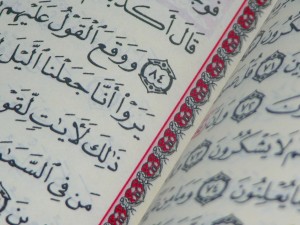
“Engrossed is the bee of my mind
On the blue lotus feet of my Divine Mother.
Divine Mother, my Divine Mother,
Divine Mother, my Divine Mother.”

The line between secular music and that which is laid claim to by religious and spiritual institutions is both becoming more pronounced and integrated. Often times those very places we go to seek our uplifting are excluding certain music styles and yet, today we are experiencing an awakening of a diversity of what is considered spiritual.

The question we now ask is: Does it really matter who includes what musical style or genre if the music leads you to an awakening and is offered with an honest intention? There is an endless array of music leading us to that place, all we simply need do is open our hearts and minds and sing.

We neared the end of our Unity service with “New Words,” by Maury Yeston from the play History Loves Company , performed by a guest singer. The song itself is not particularly religious or spiritual, but nonetheless moved the congregation to tears. Imagine yourself speaking these words to your child, with the highest of intentions. How can this not be a moment of spiritual sincerity? Does it really matter where we sing our songs of love?

“New word today, say stars…
As they blink all around us, playing starry-eyed games
Who would think it astounds us simply naming their names?
Turn your eyes from the skies now
Turn around and look at me
There’s a light in my eyes now
And a word for what you see
We call it love, my son
Say love
So hard to say, my son
It gets harder
New words today, we’ll learn to say
Learn moon
Learn stars
Learn love.”
[From the play, History Loves Company by Maury Yeston]

“The analysis of beauty by St. Thomas Aquinas helps us appreciate the value of the musician because for Aquinas, the beautiful stimulates not only the pleasure of the ear but the delight of the mind.” [ DR. Basil Cole, O.P. ]

Discuss this article

[By Tom Crenshaw]

Zehnder: Emergent Worship Music

Wednesday, November 5th, 2008

When my friend Mike Morrell posted a blog entry about Worship for an Emerging Church , I was a bit skeptical. Having been a member of an evangelical megachurch in the past (1978 to 1994), I’ve had my fill of “worship songs” that are mindlessly repetitive, shallow, or theologically offensive. And most of today’s worship music just sounds the same to me – it’s not something I’d choose to listen to (except for the David Crowder Band and some, but not all, of the artists in the Passion series).

But I got the CD Mike was blogging about – Going Up? by Zehnder – and I was very pleasantly surprised. Twins Tom and Tim Zehnder compose, arrange, perform and record as an indie worship band based in Los Angeles. Tim plays bass and doumbek, Tom plays guitar and djembe, and together they blend their voices in a way that sometimes sounds like a male version of The Indigo Girls (and if you know me at all, you know that’s high praise). Most of the songs here are reminiscent of the better “alt.pop” artists like Sufjan Stevens or Ben Lee. The music jumps around from genre to genre – a powerful urban rap called “Justice Jam” is followed by a cello solo – but these guys are so talented, it works, producing an album with a multicultural vibe.

Zehnder’s song “I Believe” (based on Mark 9:24, “I believe; help my unbelief”) was so moving, and so honest, it brought a tear to my eye. The twins do a hauntingly beautiful version of the Appalachian hymn “What Wondrous Love Is This.” My favorite song on the album, though, is “Breathe In, Breathe Out,” which (like the best of the Emergent Christian movement) pays homage to the ancient while still being postmodern:

Shalom, salaam, namaste
Ancient the paths, we find a new way
To be one in spirit, mind and body this day

You can find out more info about Going Up? , and download a song from the album, at ztheband.com .

[By Darrell Grizzle, a Licensed Professional Counselor and writer from Marietta, Georgia who blogs at " Blog of the Grateful Bear ."]

Discuss this article

A Musician’s Conversion

Wednesday, September 24th, 2008

In this week's Finding My Religion column in the SFGate , David Miller posted an interview with Abdul Hamid Robinson-Royal, a professional studio musician and Broadway performer who, although describing himself as "culturally and experientially (Christian) Pentecostal", converted to Islam during his years of spiritual seeking. In this article, Robinson-Royal shares about "the winding path that led him to Islam, his former life in the Pentecostal church and what it's like being a Muslim in America today."

A former Pentecostal preacher talks about why his spiritual path led him to Islam
by David Ian Miller, SFGate.com
from Monday, September 22, 2008

Often, the spiritual path isn't like a superhighway that takes you straight to your destination. It's more like a road with plenty of blind intersections and a tendency to veer off in unexpected directions.

So it was for Abdul Hamid Robinson-Royal, 47, who became a Muslim four years ago after spending more than 30 years as an ordained Christian minister.

Robinson-Royal, whose birth name was Reginald Lenoah Royal, grew up in the Pentecostal tradition. His family belonged to a mostly African-American church in Milwaukee, Wis., where members held strictly to the codes of the Bible. He became a minister at 16 and pursued a career as a musician while continuing his education. That led to a successful, 12-year stint on Broadway, where he performed and recorded with such musicians as Phil Collins, Natalie Cole and Melissa Manchester. Along the way, he gradually began asking questions, whose answers radically changed his worldview and religious convictions. (MORE...)

You can read David Miller's full article and interivew with Robinson-Royal on the SFGate's website by clicking here .

Music and Art as a Way of Prayer

Saturday, September 6th, 2008

I want to invite you into a new way of thinking – a fresh way of experiencing prayer and spiritual insight – a reformed way of entering worship. For, you see, today I want to ask you to be open to the voice of the Living God as encountered in music and the arts. Don’t get me wrong: I am not saying that the One who is Holy is not present in traditional styles of worship and prayer; nor am I suggesting that what we are about to embrace in this experiment is better than the liturgies of previous generations. That would be both stupid and arrogant.

Rather what I am trying to articulate is that at this moment in time – for a thousand different reasons – there seems to be a consensus emerging that music – and other forms of artistic beauty – have a new role to play in the awakening of sacred compassion and hope within and among God’s people. That is to say, from painters and dancers, to poets, sculptors and musicians a chorus is forming around the idea that art can not only show us something of the world that ought to be, but beauty and music can help us taste it and see it, too.

Music, you see, can bring healing and nurture to both head and heart simultaneously – it can inspire and strengthen – and put us into intimate communion with the Lord so that our prayer is no longer an abstract intellectual exercise or a childhood habit of superstition, but a feast where we are fed from the inside out by God’s gracious presence. The poet, Maya Angelou, put it like this:

A Rock, A River, A Tree
Hosts to species long since departed
Marked the mastodon,
The dinosaur, who left dried tokens
Of their sojourn here on our planet floor,
Any broad alarm of their hastening doom
Is lost in the gloom of dust and ages.
But today, the Rock cries out so clearly,
forcefully.
Come, you may stand upon my back and face your distant destiny,
But seek no haven in my shadow,
I will give you no hiding place down here.
You, created only a little lower than
The angels, have crouched too long in
The bruising darkness
Have lain too long
Facedown in your ignorance,
Your mouths spilling words
Armed for slaughter.
Now the Rock cries out to us today,
You may stand upon me; but do not hide your face.
For across the wall of the world
A River sings a beautiful song. It says,
Come, rest here by my side.

Does that resonate with you at all? She is saying what is being felt and created and experienced all over the world: the ground of our being – the Rock of existence and creativity – the very heart of God is calling us to rest – to be comforted – dare I say to be healed? So that we, in turn, might share the bounty we have received from the very heart of God as compassion and beautiful acts of justice.

This is critical – this is a deep way of living our spiritual commitments – for it is embodied spirituality, it is shared in community rather than privatized and it is about both head and heart. "Come to me all ye who are tired and heavy laden and I will give you rest, right? Are you tired, frustrated, burned out on religion? Come away with me… and I will show you the unforced rhythm of grace." (Matthew 11: 28)

And that is what [the act of] worship asks you to consider: letting go so that you can feel the unforced rhythm of grace. Letting go and being carried by the music, you see, is a way of prayer.

Scholars have argued for millennia about [the last chapter of the book of Job] – some choose to translate the Hebrew one way while others turn it upside down and draw opposing conclusions – but another consensus is emerging that perhaps the poet Stephen Mitchell has got it right. After 42 chapters of agony, death and fear – after 42 chapters of Job sucking it up and getting horrible spiritual wisdom from his so-called friends – after finally breaking down and screaming at the Lord in rage and encountering God’s mystical and almost Zen-like response from out of the whirlwind – Mitchell translates Job's epiphany like this:

Lord, I now know that you can do all things and nothing you wish is impossible. Who is this whose ignorant words cover my design with darkness? I have spoken of the unspeakable and tried to grasp the infinite. Listen and I will speak; I will question you, so please instruct me. For before I had only heard of you with my ears; but now my eyes has seen you – I have experienced you – so now I will become quiet, comforted that I am dust.

Now be careful: Job is not confessing that he is worthless or unworthy or filled with shame or sin when he tells God that he will be comforted that he is dust. No, he is admitting only that when he surrenders – lets go to all his preconceived notions, hopes and fears about God – can his humanity - dust - be at rest in God’s loving and sacred presence. Are you with me? When Job lets go… he can find rest and comfort in his human condition because he has found the healing presence of God in his life. No more abstractions. No more superstition. When he let's go, he let's God be God and that allows his dust to dust/ashes to ashes humanity to rest.

Since September 11th, more and more artists all across creation are wrestling with how they can help us both let go and be comforted by God’s presence. They are reclaiming their sacred calling to help us move beyond the cynicism of the status quo and imagine the world the way it ought to be – a world where we do something beautiful for the Lord – and are strengthen by the unforced rhythm of God’s grace.

NOTE: What you have just read was the introduction to an extended meditation on music and scripture based upon readings from the Community of Iona. To see the full meditation liturgy which weaves songs like the Beatles' "While My Guitar Gently Weeps" and Joan Osborne's "One Of Us," see this article's original posting HERE .

[By "RJ" - a musician, blogger and pastor serving a United Church of Christ in Pittsfield, MA. Visit RJ's powerful blog - When Love Comes to Town .]

Keeping the Faith

Thursday, July 31st, 2008

“We have Jewish people. We've had Hindus. We welcome people of all spiritual traditions. We incorporate their traditions to some extent,” Hall said. “We invent our own rituals. We invent our own way of expressing our spirituality. So we're very freewheeling.” RockOm is excited to share with you a story about a Pennsylvania church that has not only grown into a multi-faith site, committed to cross-tradition unity - but also has a strong and unique musical legacy.

Doug Katsaros was only 13 years old when the Rev. Gordon Dragt asked him to play the piano at Pebble Hill Church in Doylestown Township.

“We're atheist,” Katsaros told Dragt then.

“It doesn't matter,” Dragt replied. “It's just all going to be about the music.”

So Katsaros thought of the “churchiest” song he could — “Lady Madonna” by The Beatles — and played it at Pebble Hill Church that Sunday. He stayed and played nearly every Sunday for five years.

Katsaros eventually moved to New York City, where he wrote jingles (“By Mennen” ring any bells?), worked on records and orchestrated and conducted Broadway musicals (“The Rocky Horror Picture Show” and “Altar Boyz”). And Dragt eventually moved on to another church.

But Pebble Hill Church remained, and the congregation maintained its love of music and the arts.

And this week, for the church's 40th anniversary, Dragt and Katsaros and the Pebble Hill congregation joined together to dance and sing and celebrate.

“It's wonderful to know that it's still going,” Dragt said. “I'm quite excited about that, and very excited about going back.”

Dragt was 27 years old when the Reformed Church of America bought the property at 320 Edison-Furlong Road and asked him to start a church there.

“I thought to myself, "Well, so what does it mean to begin a new church?' Normally, the process would be you would buy some property, build a building and go about inviting people to come. But I thought that was kind of establishing a new church in an old way,” he said.

“So I thought, "What would it be like to establish a new church?' So that's what we set out to do.”

Dragt and the early members of the congregation built a yellow barn on an existing barn foundation in 1967 and started having church services there in January 1968.

Dragt wanted the Sunday worship service to be a celebration.

With the then 13-year-old Katsaros as musical director, the church had pop music, dance and theater on Sundays.

“I'd play the piano. My brother started playing a little bass. Ed Dannon started playing a little drums. Johnny Phelps started playing a little guitar. We had a violin, a saxophone and a flute. We had a little orchestra. And we would all sort of make stuff up during the service,” Katsaros said.

They wrote, choreographed and sang their own version of “Jesus Christ Superstar,” and took the performance to other area churches.

“The church was developed from the beginning to be what we called a public church — a church that was very much involved in the community,” Dragt said.

So the church also had musical performances on Friday nights for the local junior high kids, coffee houses for the local teenagers and concerts throughout Central Bucks.

Then Dragt started bringing Arthur Hall and the Afro-American Dance Ensemble from Philadelphia to Pebble Hill a few times a year to perform. And the Pebble Hill congregation would go to Philadelphia to celebrate Kwanzaa with the group.

“It was just an eruption of color and energy on this Central Bucks scene,” said Pebble Hill pastor and celebration coordinator Larry Hall, who was the Central Bucks reporter for The Intelligencer at the time.

The church got involved in protesting the Vietnam War.

And later, in 1974, Dragt performed his first gay commitment ceremony at Pebble Hill.

“That was before people even had that on their minds, especially people in Central Bucks. That kind of became an issue,” Dragt said.

“But Pebble Hill during that time became very much a welcoming place, not only in multi-racial, but in multi-sexual orientation, as well. People were very welcome to be open and so that ended out to be part of our ministry that was unintentional.”

Dragt said he thinks the church filled a needed niche at the time.

He left in 1979 because he felt the church needed to grow on its own and he needed to grow on his own.

Pebble Hill Church severed its ties with the Reformed Church 11 years after Dragt left and swung in a New Age direction. But it kept the traditions Dragt had started — and added to them.

“We have Jewish people. We've had Hindus. We welcome people of all spiritual traditions. We incorporate their traditions to some extent,” Hall said. “We invent our own rituals. We invent our own way of expressing our spirituality. So we're very freewheeling.”

That's one of the things Gail Rocke, of Coopersburg, loves about the church.

“We celebrate all of the faiths. You don't know if you're going to show up and it's going to be a Celtic ritual or a Native American presentation or a Hindi ritual,” she said.

“We are all children of God,” Hall said. “And we want to help one another to fully realize who we were put here to be in a loving context.”

Asked what he thought of the church's current direction, Dragt said, “That's not exactly the direction that I would be in. But we need a variety of religious experiences and I think they fulfill that.”

[By Christina Kristofic. Article originally posted to The Intellegencer and PhillyBurbs.com ]

adobe software home windows 7 military discount buy windows 7 ultimate product key best discount prices for full windows 7 ultimate operating system cheap software regcure microsoft office home discount software at discount prices cheap adobe soundbooth cs4 buy adobe dreamweaver cheap buy lotus software minitab software price cheap windows 7 ultimate software windows 7 starter edition cheap easyshare software downloads download norton antivirus 2010 instant again buy microsoft internet keyboard pro buy software faceonbody buy microsoft office 2010 pro plus microsoft buying programs best price on microsoft outlook graphics desktop publishing software download discount adobe illustrator buy used microsoft picture software microsoft office 2007 professional best price buy microsoft office professional plus 2010 buy photoshop cs5 cheap adobe flash software graphics desktop publishing software download buy windows 7 professional 64 bit microsoft vista college discount buy dreamweaver cs5 license best price for microsoft word downloadable digital software discount windows 7 home premium upgrade cheap Adobe Creative Suite 5 Master Collection cheap Creative Suite 5 buy adobe photoshop cs5 online download and get serial # now cheapest price for microsoft office pro adobe acrobat 8 standard discount purchase Adobe CS5 Production online adobe after effects buy after effects cs5 mac discount adobe education discounts buy microsoft office software Creative Suite 5 Production with discount cheap Adobe CS5 Design where to buy Adobe CS5 cheap Creative Suite 5 Design to buy windows 7 cheap Creative Suite 5 Production microsoft government discount microsoft powerpoint 2003 with student discount cheap windows server 2003 download sony vegas pro 10 non profit accounting software prices community health center Adobe Creative Suite 5 Design with discount purchase on line Adobe Creative Suite 5 Production purchase on line Adobe CS5 Design Premium Adobe CS5 Production Premium oem price of Creative Suite 5 cheapest Creative Suite 5 Production Premium Creative Suite 5 Master Collection with cheap price purchase Adobe Creative Suite 5 Design online purchase Adobe CS5 Production on line web store Creative Suite 5 Design Premium best prices on Adobe CS5 purchase online Creative Suite 5 where to buy Adobe Creative Suite 5 buy Creative Suite 5 Master Collection oem buy CS5 Design Premium buy cheap Adobe Creative Suite 5 Production where to buy Creative Suite 5 Web Premium buy Creative Suite 5 Web Premium oem lowest cost Creative Suite 5 Master buy Creative Suite 5 Master online purchase online CS5 Web Premium discount Creative Suite 5 Master purchase Creative Suite 5 Web Premium lowest cost Adobe Creative Suite 5 Web microsoft office+discount windows seven discount for employees where to buy Creative Suite 5 Design Premium symantec discount download dreamweaver cs5 full version download adobe premiere cs4 pro cost of Creative Suite 5 discount microsoft home & student 2010 office 2007 home and student oem adobe photos versions adobe adobe photoshop cs2 downloads adobe essentials 2 ms office suite 2007 office 2007 slo key adobe flash image integrating office 2007 sp1 adobe fllash adobe reader install file buy microsoft office 2003 office 2007 beta activation buy office basic 2007 adobe cs4 plugins adobe lightroom 2 adobe photo effects microsoft office 2007 key gen microsoft office 2007 educator discount download adobe dreamweaver cs3 microsoft office 2007 professional best price buy norton internet security 2010 discount microsoft office pro 2010 microsoft word cheap ca erwin data modeling software cheap microsoft office 2007 plus price antivirus software for windows 98 cheap cheap adobe cs5 for windows buy office 2007 product key replica wathes cheap replica louis vuitton watches ladies replica cartier watches buying microsoft office online buy photoshop software buy photoshop cs4 ms windows software student discount download illustrator cs4 download mp3 software download windows 7 starter edition microsoft office 2007 student discount acrobat 9 pro extended download cheap commercial aluminum windows microsoft office educator discount buy windows 7 ultimate product key online download sony vegas pro 10 dreamweaver buy dirt cheap adobe photoshop software cheap payroll software software discount prices buy kaspersky internet software uk buy software discount cheap photoshop cs5mac upgrade discount