
Celebrating the Work of George Harrison
by Brad Richason,
Twin Cities Performance Art Examiner
“I wanted to be successful, not famous.” – George Harrison
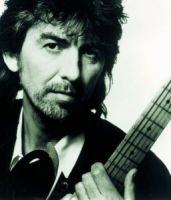 When considering the legacy of The Beatles, there’s a tendency amongst music fans and scholars to focus on the works of John Lennon and Paul McCartney. The emphasis is understandable considering the depth of groundbreaking music created by the two. But narrowing the focus too much overlooks the essential contributions brought by Ringo Starr and George Harrison. While Starr’s rhythmically precise drumming style was an integral piece of The Beatles sound, the spotlight of this article is on Harrison, the band’s lead guitarist whose 66th birthday would have been February 25th. Not only did Harrison provide innovative styling to many classic Lennon/McCartney works, but many of his original compositions rival those of his bandmates in, if not quantity, quality and longevity.
Songs like "While My Guitar Gently Weeps", "Here Comes the Sun", and "Something" are essential tracks in any respectable Beatles collection. Yet true to the moniker he would adopt at the onset of his solo years, Harrison remained the “dark horse” of The Beatles. Ever the introvert, Harrison was more inclined to choose quiet contemplation over public adoration. In lieu of interviews and photo shoots, Harrison preferred to express himself through music and if he held any frustrations over his art it was in the practical issue of fitting in his releases alongside the more prolific Lennon/McCartney.
In the early years, though, songwriting wasn’t much of an issue for Harrison as his focus was on lead guitar duties punctuated by the occasional vocal. Still, even without composing, Harrison provided a signature guitar that set the band apart. Consider the jingly lead guitar throughout "A Hard Day’s Night." Using a 12 string Rickenbacker, Harrison crafted a crisply distinctive sound that would become a staple amongst Roger McGuinn of The Byrds and other performers in the mid-60s folk rock scene. Harrison’s later use of the sitar, first on "Norwegian Wood (This Bird Has Flown)", was largely responsible for the instrument’s appropriation into psychedelic rock. And his embrace of slide guitar in the late 60s/early 70s produced a much imitated “wa-wa” riffing that has influenced scores of guitar virtuosos.
As early as 1963, Harrison had dabbled in original compositions. His first credited song can be found on The Beatles’ second album, With the Beatles. Befitting his private personality, the song was entitled, "Don’t Bother Me". While subsequent early efforts often musically mirrored those of his contemporaries, Harrison’s satiric wit emerged in such works as "Taxman" and "Only a Northern Song". But Harrison’s most distinct musical and philosophical inspiration was provided by his embrace of Hinduism, a belief system that he would maintain for the rest of his life. Harrison’s enthusiasm for Hinduism was first evidenced on the brazenly metaphysical "Within You, Without You" from 1967’s Sgt. Pepper’s Lonely Heart’s Club Band . Though bashed by much of the contemporary press, the song indicated a bold new direction for Harrison, one in which personal belief trumped commercialism.
Transcendental spirituality is the driving inspiration behind much of Harrison’s post-Beatles material, most notably the masterful All Things Must Pass – a landmark work that fuses spiritual lyrics and guitar oriented arrangements under a Phil Spector produced, reverb-heavy, Wall of Sound. Amongst all of the Beatles solo work, All Things Must Pass stands as one of the (if not the) very best. Harrison would continue to incorporate spiritual beliefs into his music all the way through his final album, 2002’s posthumously released (and criminally underrated), Brainwashed .
Nor did Harrison limit his philosophies to music, but instead lived in accordance with his principles. He was an avid supporter of humanitarian efforts, launching rock’s first massive charity concert, 1971’s Concert for Bangladesh. Performing alongside such luminaries as Bob Dylan, Eric Clapton, and Ravi Shanker, Harrison raised money for and awareness of the impoverished refugees from the Bangladesh Liberation War. And although the charitable contributions were tied-up in legal red-tape, the event has since become a model for how concerts can be used to spotlight a cause.
Harrison was also one of the first musicians to establish a charity dedicated to advancing humanitarian causes. The Material World Foundation , established in 1973, continues to provide funding for a vast number of organizations dedicated to environmentalism, medical research, and human rights.
Twin Cities fans will have a chance to pay homage to George Harrison with two tribute concerts occurring over the next two weeks. The first, taking place at the Varsity Theatre on February 20th, will be the annual Dark Horse Revue – a showcase of Harrison’s music performed by local musicians. Proceeds from the show will benefit the Material World Foundation.
The second tribute, dubbed the George Harrison Birthday Bash and hosted by Famous Dave’s in Calhoun Square , will showcase Joey Molland of Badfinger covering Harrison classics. The even t is part of a weekend long “British Invasion” which will also feature Tumblin’ Dice (a Rolling Stones tribute) and Rubber Soul (a Beatles Tribute).
Whether attending a show or not, Harrison fans will always find the closest connection through his music. By allowing his art to reflect his values, the music of George Harrison continues to strike an enduring universal chord. Such a legacy is the greatest tribute of all.
http://www.georgeharrison.com/
Reprinted with permission

 Email Us!
 RockOm RSS Feed
 RockOm Facebook
 RockOm MySpace
 RockOm Twitter
 RockOm YouTube
 RockOm Viddler


