"People worry about kids playing with guns, and teenagers watching violent videos; we are scared that some sort of culture of violence will take them over. Nobodies worries about kids listening to thousands - literally thousands - of songs about broken hearts and rejection and pain and misery and loss."
[Nick Hornby,
High Fidelity
]
As the old adage goes, "energy flows where attention goes." Does your music help point your attention to what is good, noble and true? Or do the sounds pumping into your head via your headphones pull your thoughts into the realms of despair and darkness?
Of course there are times for it to do both. Sometimes there's nothing like a good, angry Nine Inch Nails song or brooding Tori Amos piece to help you work through (or just wallow in) difficult feelings.
But perhaps what Mr. Hornby is saying is that music's ability to influence your emotions (or even behavior) shouldn't be underestimated.
My mind thinks back to the Columbine assassins who apparently listened to Marilyn Manson or how The Beatles' "Helter Skelter" infamously influenced the murderous actions of Charles Manson. Is this all folk lore or fact? Did the music influence the behaviors or did people prone to heinous acts simply and in an unrelated coincidence prefer a darker style of music? Who the hell knows.
I'm certainly not suggesting we only listen to New Age flute music in order to keep our minds positive. Most of what I personally listen to tends to have been pulled from a darker place, or at least a place that acknowledges the full expression of human emotion and reality. But if "we become what we behold," then consistently filling our minds with "toxic" music MAY have some affect on our physical/emotional state. Or does it?
YOUR TURN:
What do you think? Does continued exposure to "songs about broken hearts and rejection and pain and misery and loss" affect the listener negatively? Or is all of this simply scapegoating, pointing to music as a straw man in order to take the blame off the individual?
Newswise
— Virtually anyone who grew up in the rock music era can point to a time, place or poignant memory that is seamlessly tethered to a song. For Vietnam War veterans, the backdrop of the war made that connection all the more powerful and emotional.
Two University of Wisconsin authors are mining this deep connection in interviews with hundreds of Vietnam veterans around the country. The final product will be a book that weaves together personal stories about how music resonated with veterans, and also explores the unique history of underground radio in Vietnam and the perspective of rock musicians on the war.
But the very act of talking about the subject is proving to be "cathartic" for many.
"What is constantly so astounding is how (discussing music) makes it so much easier to talk about what it was like there, how they felt and how they are feeling now," says Doug Bradley, a Vietnam War veteran and director of communications for the UW System. "Thousands of vets have still locked it down, have never talked about their experience. This has facilitated a discussion with some people who have never opened up before."
Craig Werner, chair of the Afro-American studies department and co-author of the book, says that power of song for veterans can fill the void where words simply fail.
"When we get into spoken language and words to describe an experience, we're stuck - like it or not - using the terms that 'the idiot politicians' use," says Werner. "When we pulse vets on this topic, we get a clear sense of how inadequate our public language is top describe the war."
Adds Werner: "I think music is where memory lives."
Werner is a rock music historian who specializes in Motown, rhythm and blues and other musical movements rooted in the sixties. He also grew up in a military town in Colorado and played in a rock band that frequently visited the base - "as close to a front-row seat as someone outside the military could have."
Bradley and Werner got the idea two years ago during a veterans Christmas gathering in Madison, and it quickly fell into place. They recognized that, unlike the highly diversified genre market that exists today, music back then was a "shared canon," and that certain songs are referenced repeatedly as important. "Back then, we all had the same Top 20," says Bradley.
That being said, they also are finding that the songs that mattered most to veterans diverge a great deal from the cliched artifact of that era, the "protest song." That was kind of a Hollywood illusion, Werner says.
"As compared to kind of the standard-issue, sixties nostalgic movie soundtrack - the demonstrations and all that - I think that on the home front, people tended to be more ideological and expressly political, in the capital P sense of the word," says Werner. "But most of what we are getting are personal stories. They're political on a certain level, but it's not about politics."
Some of the best anecdotes are about songs rooted to place, Werner says. One veteran talked about how his experience on Vietnam's China Beach is always evoked by Otis Redding's "Sitting on the Dock of the Bay," and its desperate and defiant lyrics.
Another describes his experience as a "tunnel rat," whose job was to crawl through tunnels by first dropping smoke grenades to find the exits. The song? "Purple Haze," by Jimi Hendrix, a song the veteran played that matched the grim task.
One clear theme is that the songs that resonate with vets aren't necessarily songs about the war at all - but about songs that evoke a feeling or paint a picture. If the authors were asked to create a short list of the music that mattered most, here would be some of the essentials:
- "We've Gotta Get Out of this Place," by the Animals. "We had absolute unanimity is this song being the touchstone," says Bradley. "This was the Vietnam anthem. Every bad band that ever played in an armed forces club had to play this song."
- "Chain of Fools," by Aretha Franklin. This song derived many layers of meaning for vets and frequently represented the growing disenfranchisement between the "grunts" and the chain of command. The song resonated strongly with African-American vets.
- "Fortunate Son," by Creedence Clearwater Revival. The piercing lyrics about sacrifice ("And when you ask 'em, 'How much should we give?'/They only answer more more more") made the song all the more powerful. Werner says that a lot of CCR comes up in interviews, with "Who'll Stop the Rain" and "Run Through the Jungle" also high on the list.
- "Fightin' Side of Me," by Merle Haggard. Werner described this not so much as a pro-war song, but an "anti- anti-war song," and it was one of many popular songs from country music artists.
- "These Boots are Made for Walkin'," by Nancy Sinatra. "It's amazing how many vets out there are in that Nancy Sinatra army of supporters," Bradley says.
- "What's Goin' On," by Marvin Gaye. "The whole tapestry it weaves" has a lot of meaning to vets, says Werner, especially since a good portion of the song is about Gaye's brother's experience in Vietnam.
An Interview with Nutone artist Donna De Lory
By Trevor Harden,
Trevor@RockOm.net
Donna De Lory's latest album
Sanctuary
(out now on
Nutone Music
) is by and large a mantra-based chant album, using ancient Sanskrit devotional prayers alongside original lyrics, all set to a beautiful and meditative East-meets-West instrumentation. Through her heartfelt, gentle and breathy vocal delivery, Donna's singing wraps the listener in a nurturing love and encourages a sense of devotion and transcendence.
Donna has not always been focused on yogic music, however. Her past pop career had her singing vocals on albums by Santana, Carly Simon and Jewel to mention a few. Most famously, Donna was known as one of Madonna's main live accompanying vocalists for nearly 20 years.
In this interview, Donna De Lory shares with RockOm about the title track from her album
Sanctuary
, how conscious intention transforms music into a healing force, Joseph Campbell's influence on her life and work, and what being open to the Divine Mother has taught her about God.
Trevor: I'm not an overly emotional guy but I found that upon listening to your album for the first time, as the beautiful first track rolled over into your song "Sanctuary" - and I heard how you took this old Christian folksy worship song that I grew up with and brought it into a meditative and spiritual arena - I just got kind of choked up. What is your history with the song "Sanctuary"? Is it something you came upon recently or did you have a church background that introduced you to the song?
Donna: Not really. Growing up my family was Christian-Catholic and mom is actually a recovering Catholic. She was wanting to be a nun when she was young and grew up in Catholic schools and then kind of rebelled against that. So when I was a kid I always wanted to go to church and I went with my friends to different churches or with my Jewish friends to their temple. Not that I was trying to find the place for me, but I just liked the sense of community and the devotion that you felt in that environment. I moved to Nashville when I was eighteen and I went to church there and started on my spiritual path at that time. I probably did hear the song "Sanctuary" in the church but more recently I heard it on a friend's CD.
I heard the words "with thanksgiving I'll be a living sanctuary for you" and sometimes I'll hear words that someone else wrote that really ring true, something I would write. The actual song goes on for many more verses but I didn't resonate so much with the other words. I felt like all I really wanted to say was this over and over again. And that's something I love about the mantras where you take something very simple - either the names of God or a phrase like "I am divine love" - and you sing it over and over again. I love what I've learned about mantra-based music and how I can apply that to other songs whether it's "Amazing Grace", my song "Sky is Open", "May God's Love Be with You Always" or "Sanctuary."
It's beautiful to say something that can resonate with people but not engage them too much. Music is a tool for opening and when you study the history of music I believe that was the original intent of music - to open people up, to heal and to move people. Coming from a really commercial pop background, I now look at music this way and set intentions for the music that I make. I want to have this be my gift for other people to help them. Consider what Mother Teresa did or Amma, people who are giving, giving, giving. I feel like my music is my small piece of what I can do. That song, "Sanctuary", for me reminds me of that. People come up to me all the time and say, "Please don't stop doing this. I know it's hard, you've got your family and other things, but please keep doing this."
Trevor: When we spoke with one of your label-mates and friends David Newman, he shared about the yogic use of sound as a path for healing. So that's what you're talking about here, right? That music has a healing power?
Donna: When you have that conscious intention it absolutely has a healing power. I was doing an interview a couple of weeks ago and someone mentioned a man's name, a healer, and wanted to know if I knew of him. I said, "No, I don't know this person." They said, "He exclusively uses your music to heal people. The vibrations and the frequencies in your music really help and he has a lot of experience with that." It was beautiful to hear that and I thought, "Of course!" I've personally been there with people when they've transitioned and left the body as music played or people will play my music when there's a baby being born. I hear stories like this and that is what music can be used for - these deep, deep meaningful experiences in our lives. And it's beautiful because when you use music in this way you can go back by playing this music again to that place. It's a tool to take you back to that moment again.
Trevor: In the album's liner notes you spoke to how Joseph Campbell was an inspiration for you. What did his work mean to your spiritual journey?
Donna: Wow, it was just his overall view of mythology and man's quest and incredible awe for this higher power. This is what he dedicated his life to study and in going back to see cave drawings and all the art. It's basically this yearning to know God, a connection to nature, and that we're all connected. We need to get back to that place, obviously, because what we're doing with the planet and each other is not respectful. Because of the damage that has been done it's especially time to wake up and to realize these things, that we're all really connected.
Plus he just gives you so much information you can go out and learn about. I first learned Sanskrit from watching him and hearing his talks. He talked about Sanskrit as the great spiritual language of the world because of how old it is and the intention put into it. I went further into studying yoga and began hearing the words again and started putting these mantras and words into my songs. I've always been on and interested in a spiritual path, whether that was studying Joseph Campbell or Yogananda or something from the Christian tradition - wherever I was.
Now it's yoga and everyone's coming together to help themselves and other people through yoga. I love yogis because they're generous and help other people. As far as the physical practice of yoga in our country is concerned, I think it's great if there's a yoga center on every corner because it's just going to make people be more compassionate and have some of this intention. It's OK even if it's just "Namaste" at the end of a class, at least you're bowing to some thing that's greater than yourself and I think we need that.
Trevor: On a personal, non-musical note, I see that you have two children. Everyone agrees that children become like our gurus as they have so much to teach us. What are they teaching you right now?
Donna: You don't know love until you have children; every day I'm being taught something. I'm learning just "being" and not having to "do" all the time - just being in that moment. I'm really feeling time passing quickly now so I'm trying to hold on to these moments. Even when I look back to pictures of my 6-year old daughter when she was a baby, I don't even remember! It's going by so fast. I say to my husband, "Did you take more pictures? Did you get the movie of them?" I'm realizing this is the good stuff, the stuff of life.
It's the interesting thing about life, as you go you realize what's really important. With all those years that I spent striving for something in my career and all those desires, now I'm trying to just "be" instead of wanting so much all the time. I'm just so grateful I'm right here.
Trevor: Speaking of mothers, the culture in which we live here in the West has a very masculine view of God overall. You have "Jai Ma" on your album and so what do you think we're missing in our understanding by only having a Father figure or more specifically what has being open to the Divine Mother meant to your journey?
Donna: I think we're missing the nurturing aspects of the divine. I was watching a video of Amma and they were asking her, "Why do you think people love what you're doing so much, just coming and getting a hug?" She was saying that if she can make both men and women feel more of that nurturing Mother energy, that's what she wants to do. Her hugs are opening those people up. I guess with my music, I want to do that same thing. And by me being a mother now I'm starting to understand it and have more of that to share in my lyrics and music. Since I had my daughter who is six, "He Ma Durga" has been my theme song or mantra. It was really powerful for me and for other people too. When I sing it, people are holding themselves and being compassionate toward themselves.
That's what's missing; we don't have that kind of nurturing support to love ourselves, or know God is the ultimate lover who loves and holds you. And that is what Amma is doing; she's loving everyone. Anyone who comes up there for a hug, she gives them the same amount of love. Whether you're a celebrity or the poor and dying, it's that ultimate love. Also Mother Earth gives us that all the time and we don't see it, though some people do. She's giving us that and we keep doing what we do with the earth and not being conscious, and the Mother's still there giving me another chance to have a child and this life and creation.
I think I'll always sing those mantras because it's so important to me. When I think of doing another mantra CD I think, "I have to keep singing Mother." I just worked on a compilation CD that is specifically made for doctors giving this music to their patients. On it I basically just sing, "Mother, Mother," in English, Spanish and Italian. Sometimes just saying the words "mother" is so beautiful. If we can say these mantras and get out of our heads about our own mothers, but instead recognize that nurturing love that is there for all of us, then we can really feel it. Everyone feels it inside somewhere so I love that music can bring that more to people. At my shows I love when it's exciting and people are dancing, but the most powerful thing is when you get people to open, whether they're crying or want to go give someone a big hug. After I play my music, that's how I feel; I feel like my heart is so much more open.
The earth is populated with thousands upon thousands of musical acts who write, record and perform within their comfort zones, using the live stage to rehash their recorded music. Sparse are the bands willing to experiment, improvise and truly "play" in the playing of their music. Medeski, Martin and Wood, however, are one of those bands.
With as broad of a musical palette as any ensemble, MMW explores and experiments with sound, rhythm, and melody, unafraid to take chances or even to fall on their faces. But don't expect that often, as the group's well-honed skills and superb musicianship are the envy of musicians and fans worldwide.
Now in their eighteenth year together, MMW has completed a new series of albums entitled
The Radiolarians Series
(the last of which,
Radiolarians III
, was released on August 4th). The project itself was innovative in that it thwarted the tired, age-old pattern of touring in support of an already recorded album. Instead, they wrote the music on tour, performing (or even creating) fresh pieces for live audiences, only to return later to the studio to record the new pieces.
In this interview, drummer Billy Martin talks about the
Radiolarians
process, the band's openness to change, the "motherly" power in creating something new and tapping into higher dimensions through music.
RockOm: We recently spent some time with Brazilian vocalist Flora Purim and her percussionist husband Airto Moreira talking with them about their heritage, Brazilian rhythm and sound and how they’ve contributed to its evolution. Before becoming part of Medeski, Martin & Wood, you were a part of the NYC Brazilian scene in the 1980s. What led to your discovery and joining into that scene and why do you think the Brazilians seem to know something intrinsic about rhythm that the rest of the world envies?
Billy: The Brazilians have a unique rhythmic vocabulary unlike any other, which for me was very magical. When I was younger I discovered and fell in love with it so I dropped everything and for two years only played Brazilian music. It changed my life. It's a different way of being and a whole different world. I still love it and I learned a lot about African rhythms through Brazilian rhythms, really. The way I phrase and play drums is heavily influenced by that style. But once I learned to play Brazilian-style, I realized I couldn't only be a Brazilian drummer or percussionist. I had to take it my own way and reinterpret it.
RockOm: You’re also a visual artist with your printmaking, painting, pencil and pastel drawings, and other mediums. Do any of the creative attributes of visual artistry help with your creating musically?
Billy: Absolutely. It comes from the same place of exploration and experimentation. When I make art, it's usually through an improvising technique where I'm not sure what I'm going to end up with, which is the same way that I create music.
RockOm: Medeski, Martin & Wood has successfully experimented and reinvented itself many times over the years. What do you think has contributed to your being open for change - which seems to be a problem for many other bands?
Billy: I think it's just our personalities, where we're coming from and where we're going, and the chemistry we have. It's also the love we share for creating new things, keeping it fresh, being involved with growing and learning, and not being afraid to take chances. We all share that in this band. There's no real strong personality that says, "I just want to play the same thing every night. I don't want to be challenged. I just want to make the money. I just want to play the same thing and play the same little trick I do every night that makes people go 'Ooh, ahh!' Let's collect the check and play it safe." For us, that's like the fuckin' devil. It's just not the way we work.
RockOm: Many of your songs are thematic in that the song title and the composition or expressed feeling all seem to be communicating a certain theme. How much of your writing starts with a non-musical idea - where you want to write a song about a certain subject and then you put music to that idea - as opposed to just writing music and naming it later?
Billy: Only a very, very small percentage of anything is conceptual where we say, "Let's do something that's about
this
or let's take this title and create a piece of music." It's more that we want to communicate with sound and use our musical vocabulary to see what happens. We just get together and see what happens when we have a musical discussion. Then we will take notes on it, record it or just think about it. But there's only about 5% of our music that comes in [conceptually].
RockOm: Reflecting back now that the
Radiolarians
project is complete, would you say you and the group have accomplished your objectives with what you were aiming for in this collection of albums and tours?
Billy: Definitely. I think originally we were going for four different "seasons" but to me this is even better. I like the number three: we're a trio, three is a powerful number, and three volumes of music is perfect. It's asymmetrical; I like that. I am really happy with what happened. We didn't know where it was going to end up and each record evolved out of the previous one. And that was the whole point, that it was an evolving process of writing. That theme is in there: evolution, revolution, re-evolution.
RockOm: What would you say you learned most about the band or just in general through the
Radiolarians
process?
Billy: It's hard to say; we've been together for eighteen years. Musically, we're changing all the time and so as far as what we learn, it's almost hard to put words to it. I guess patience, learning how to be patient and how not to repeat ourselves. But that's an ongoing theme. On a more technical level, I'd say we're learning about making records and releasing them ourselves. We're learning how to be a record company. The things we've dreamt about are becoming true now because we've been involved with other labels and this is now our own thing. We're also learning to do more with less, financially. With Blue Note, Capitol or Indirecto there was some money there. I mean it wasn't our money... but then we didn't own the end product. It was our music but physically the recording wasn't ours and that kind of sucked. The trade-off was investing in ourselves and taking the money out of our own pockets and all the sudden you get more serious about it in a way, because now it's our responsibility to package this thing and get it out there. We've become a little more careful how much time we've spent on recording, mastering, editing or whatever.
RockOm: There’s a freedom inherent in music as well as a long history of cutting edge, innovative jazz that touches on or hints at a higher dimension in music besides the norm. What’s your experience with sound as a vehicle to higher dimensions, or higher levels of consciousness, and would you describe MMW’s music as a means to reaching those states?
Billy: Yes, it's the quickest way for me to "get there," as far as reaching another level of communication. I'm not very good with words and I've developed my own way of making music and using sound that is my own. It's been an inspirational and spiritual self-discovery that I've gone through. There's magic in there; it's real magic. Sometimes I'm doing it and I don't take it so seriously. I mean I'm always focused and trying to do my best but there's times when I don't take myself so seriously that I say, "Check me out, I'm a master and you're going to learn from me." I don't do that unless I'm teaching. I'm only going to say, "This is who I am when I'm being sincere. I'm going to do some stuff - some of it is going to work and some of it isn't - and I'm not going to be so serious about myself." But then people come up to me and they say, "Oh my God, you changed my life." To me that's the magic, the power of that stuff. Sometimes maybe when I'm not witnessing this spiritual thing that's happening, other people may be getting it. It's really cool in that way. Sometimes I'm conscious of what I'm doing and what's happening and other times other people see it.
RockOm: Do you notice those magical or mystical moments when improvising with your bandmates and you lock into a groove that seems to have come from beyond yourself?
Billy: Yes and a lot of it comes through the improvising when we make these discoveries. We look at each other like, "Oh my God, how in the hell did we just decide to do that? We didn't plan this; it just happened." We look at each other with our mouths open sometimes and that's the beautiful thing about it. Just being creative and not repeating yourself note for note is probably one of the greatest things you can do because you're creating something that hasn't been done before. When you're doing that you're creating a new thing and putting a new thing into the world; it's very powerful. Not powerful in a warrior way, more in a motherly way of creating a new being. That's a spiritual thing.
RockOm: Camp MMW has wrapped it's 2nd year. Tell us about the camp and what you've learned in working with musicians of varying levels.
Billy: We do it upstate New York in the Catskills which is in this area called the Full Moon Resort. It's a beautiful spot on hundreds of acres and the way it's set up is just perfect. We have the barn for master classes where we show films and there's other spaces in which we teach. John, Chris and I will have workshops at the same time so some of the student body comes to my thing because I'm going to do Afro-Brazilian rhythms or I'm going to talk about improvising and soloing or they'll go to John's where he's going to talk about his keyboard setup or what it means to improvise. It's a very intimate setting where we're getting hands on with the students, we're creating ensembles and they're getting to play with people they've never played with before under our direction. They also get their own time to do jam sessions at night with other people and cross-pollinate. We give them the juice and the ideas or concepts they can use and we end up having a really good time. It's only our second year but I'm confident that it's something we'll keep going.
RockOm: You're about to embark on a new string of fall tour dates. What are you anticipating about this coming tour?
Billy: We're always into writing new music but now that we have all three volumes of
Radiolarians
, we'll throw those out. We'll sprinkle the set with
Radiolarians
tunes and improvise on that and then we'll start experimenting with some new ideas. We may even get into a little more visual stuff too - video that relates to the
Radiolarians
- if it works out. But basically it's going to be the same guys up there trying to do some new shit. [laughs]
Reminiscing an old folktale from Ireland - there was a young prince named Maon who had to relinquish the throne owing to the evil designs of his malevolent granduncle who had executed his father and grandfather.
The young prince had to flee the kingdom, in the process losing his sense of speech. Some years later he happened to fall in love with the beautiful princess of Ulster who in order to bring him back wrote a love song and sent her father's harpist to compose music for it. The music, the talented harpist composed, was so soul stirring that the handsome prince immediately regained his lost voice and returned with a new found vigor to conquer his kingdom and win his bride.
A wonderful testimony to the healing power of music.
Beethoven once said "Music is the wine which inspires one to new generative processes." Without doubt, the therapeutic benefits of music have been acknowledged since ancient times - the Greeks and the Egyptians often reflected on the healing powers of music with Pythagoras devising the rules of harmonics and using it as a source for a school of philosophy and medicine.
Just recently the highly reputed Cochrane Systematic Review found that listening to music could decrease blood pressure, heart rate, and levels of anxiety in heart patients. Music eases severe stress and anxiety in patients who are undergoing treatment for coronary heart disease.
I recently had the privilege of meeting a doctor who practices music therapy at a reputed hospital here in Bahrain. He affirms the calming and soothing influence the therapy has on his patients and gave me a sweet dose of the music medicine.
Music uplifts and motivates - it rejuvenates and revitalizes. It is universal, transcending boundaries, cultures, languages and religions.
An Indian friend of mine residing in Bahrain who shares my passion for music told me of an incident some years ago where he was invited to Pakistan for a friend's daughter's wedding and happened to sit next to former president General Pervez Musharraf.
Understanding the strained relationship between the two countries, the only topic that came to his mind in breaking the ice with the president was music, which to his surprise was reciprocated in a positive manner. The president's eyes lit up on the subject like a child in a candy shop.
Music has that charming effect on dictators, even the mean Hitler was an obsequious lamb at the opera. Inherent musical cultures of ancient civilizations such as China, Persia, India, Arabia and even Europe have long used music as a self-expressive tool and a tonic for the mind, body and soul.
Music has long known to have a calming influence on babies, helping in the development of their brains and adding value to the foundation of their growth. The angelic aura surrounding music and babies cannot be denied.
Johnny Cash once said that "All music comes from God." Maybe that could be the reason music is this unspoken harmonious, but gratifying bond between the spiritual and physical life - a true life force.
On a recent NPR segment, oral historian Studs Terkel shared about people's loss of interest in the power and effects of the human voice, vox humana. He recounted a time on a train in the Atlanta airport where everyone sat silent, afraid to speak or even laugh at a joke (you can hear/read
the whole story here
).
There is certainly no musical instrument more intimate than the human voice. It is always at our command, is as close as our breath and holds significant power. I'm reminded of the classic Indian fable of the lion who was raised by goats, unaware of the mighty roar that laid dormant within. While that story is usually told to speak to spiritual truths as related to one's identity, still I find it has much to say about this powerful, transformational instrument we hold in our bodies.
And yet... most of us - especially we introverts - speak softly, shyly, or not at all. We're embarrassed to sing, to belt out at full volume or use our voices in real, meaningful ways. We clamp down and hold our breaths, squeaking out as little as we need to to get by.
YOUR TURN:
Today, see if you can tap into the power and depth in your voice. On your commute to or from work, crank up a favorite song and just let it rip. When no one's around to cause any self-conscious feelings, let out some deep, belly roars or plug in your copy of
Guitar Hero
or
Rock Band
and sing into that microphone like you're in front of 30,000 adoring fans. Who gives a rip how horribly you sing? That is not the point. The point is to blossom, to open up, to blast through resistances, and to find the spiritual, transformational gift that is just a breath away. Who knows if will accomplish anything - maybe it will, maybe it won't. Like all good spiritual inquiries/experiences, simply try it and see what happens.

 As the old adage goes, "energy flows where attention goes." Does your music help point your attention to what is good, noble and true? Or do the sounds pumping into your head via your headphones pull your thoughts into the realms of despair and darkness?
 Donna De Lory's latest album
Sanctuary
(out now on
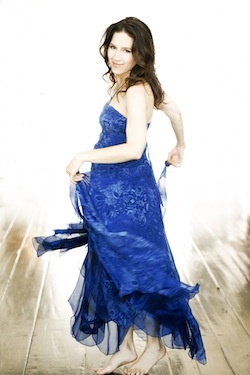 Donna: I think we're missing the nurturing aspects of the divine. I was watching a video of Amma and they were asking her, "Why do you think people love what you're doing so much, just coming and getting a hug?" She was saying that if she can make both men and women feel more of that nurturing Mother energy, that's what she wants to do. Her hugs are opening those people up. I guess with my music, I want to do that same thing. And by me being a mother now I'm starting to understand it and have more of that to share in my lyrics and music. Since I had my daughter who is six, "He Ma Durga" has been my theme song or mantra. It was really powerful for me and for other people too. When I sing it, people are holding themselves and being compassionate toward themselves.
 The earth is populated with thousands upon thousands of musical acts who write, record and perform within their comfort zones, using the live stage to rehash their recorded music. Sparse are the bands willing to experiment, improvise and truly "play" in the playing of their music. Medeski, Martin and Wood, however, are one of those bands.
 RockOm: Medeski, Martin & Wood has successfully experimented and reinvented itself many times over the years. What do you think has contributed to your being open for change - which seems to be a problem for many other bands?
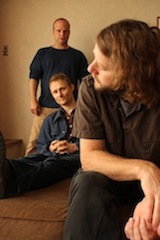 RockOm: Do you notice those magical or mystical moments when improvising with your bandmates and you lock into a groove that seems to have come from beyond yourself?


 Email Us!
 RockOm RSS Feed
 RockOm Facebook
 RockOm MySpace
 RockOm Twitter
 RockOm YouTube
 RockOm Viddler


