viagra online ordering viagra online without a prescription

Posts Tagged ‘creativity’

On Music and Miracles

Monday, October 19th, 2009

By Jolynn Lauer

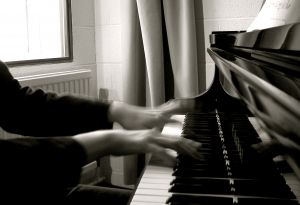
Piano Hands If you’re a product of this culture, you’ve probably had the experience of explicitly or implicitly being asked, “Who do you think you are to… (fill in the blank)?" Perhaps you’ve internalized that question and have let it stop you from doing/being the best you can do or be.

This came up for me years ago when I decided to start writing songs. I have no formal training in music, play “survival” piano mostly for my own therapeutic enjoyment, have a good ear thanks to genetics, and am a believer in, and happy recipient of, magic in my life. I figured that qualified me to write music.

Like most things in my life, I learn by doing—sometimes by doing poorly and making many adjustments as I take in new information. I’m not good at reading how-to books or studying manuals, then applying the knowledge as are a lot of my friends. Yes, I’m envious, but I’ve learned to make friends with my own learning style which has become the key to unlocking the stranglehold of “who do you think you are” in my life, and has allowed me to at least try things that call to me.

About five years ago I was driving along the highway to the coast, through acres of rolling vineyards spotted with redwood groves--the best Northern California has to offer—when my eye was caught by a raven cavorting around in the sky, glistening black against a blue so pure and bright it made my eyes water. The way this large bird caught the air currents, coasted, dipped, dove, and sailed entranced me. I pulled off the road on a gravel turn-around.

The moment I turned off the ignition, a tune began drifting through my mind, a beautiful, haunting tune that I couldn’t place. As I watched the raven sail over the vineyard words started appearing somewhere just behind my eyes. It was the strangest phenomenon. I truly felt this music was being channeled from some place other than the moment, right through my mind and body, and it was imperative that I write it down. Write it down? On what? I read music, but I don’t write it (or so I thought).

I fished around in the back seat of my car for some table paper, found a pen under the front seat where I vaguely remember it falling several weeks ago, and began madly jotting down symbols to indicate where the melody went up or down, where there were pauses, what the feeling tone of the music was, and the lyrics as best as I could capture them. I was a woman possessed. Totally focused, totally in the moment. I have no idea how much time passed. Now that I think of it, it was similar to giving birth--same all-absorbing event that takes over your life completely as it passes through you and leaves you altered forever after.

Unlike giving birth (for me anyway), that experience was to be the first of a series of song-catching events that has led me to a collection of over forty-eight songs to date. Sometimes they spring on me in the shower, sometimes in the middle of a conversation, or while sitting in the hot tub, or stopped at a red light. If we’re in conversation and you notice that glazed look come over my eyes, I’m not bored, I’m probably hearing a new melody. If I start tapping my foot, it’s a dead give-away.

I didn’t make it all the way to the ocean that day. I turned around, came home with my sheet of notebook paper in hand, and sat down at my daughter’s little Casio keyboard. I figured out which notes went best with the scratch marks I’d made, drew five lines of a music staff, and placed the notes in their proper place. I struggled some with the math—how do you get the right number of beats per measure, where do the rests need to go? And what the heck key is this in? It was a feeble attempt at manifesting a miracle, but I did it.

What I want you to know is that there is nothing special about me. You could do this too, whether you catch a song or create it from your innermost self that wants expression. You don’t have to know HOW to do it already. I’ve taken my raw material to “the experts” who’ve smiled lovingly, praised my efforts, and told me that music actually has a form. A form? Yes—there is a particular way in which you structure how the verses, chorus, and bridge appear. And there needs to be congruency with the lyrics. Well, I’ll be darned. Who knew?? So, now I’m learning that. Someday, I will have my music available so that anyone could sit down and play it. I may even figure out how to transfer it from my music file onto a blog page. Who knows, I might even try a CD, or a music video. The sky’s the limit.

Who do I think I am? I’m just me, doing the best I can at allowing creation to express itself through me. Who do you think you are? Please let me know. And, know that I already believe you are a miracle expressing.

ABOUT THE AUTHOR: Jo Lauer is a psychotherapist from Santa Rosa, CA and blogs at Jo's Creative Universe , where this article was originally published.
Musicians Encounter the Divine in Their Art

Monday, September 14th, 2009

By Margaret M. Treadwell

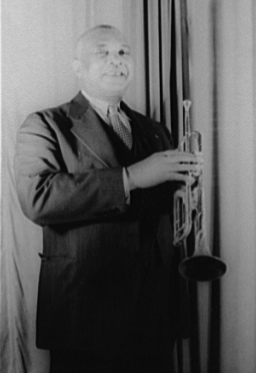
WC Handy Being who you are won’t always please your parents. The American film classic St. Louis Blues depicts musician W.C. Handy (1873-1958, pictured) as a pioneer, betraying his minister father who believed “there are only two kinds of music, the Devil’s and the Lord’s.” In marrying hymns and gospel music to blues and jazz, Handy became a legend known as The Father of the Blues. His memory has been honored annually for the past 28 years at the WC Handy Music Festival in his northwest Alabama birthplace.

Many musicians who have played for years at the festival describe themselves as feeling like they rejoin their family each summer. Indeed, their exquisite improvisations sound like they never cease practicing together, yet in the community of this spirited festival each shines forth their special talent as an individual artist. Like Handy, many had an overriding desire to make music as if there really was no choice, no matter how much their fathers discouraged their career decision.

“What part does your spirit play in your music and how does your music play on your spirit?” I asked seven male musicians who agreed to talk with me in a roundtable discussion for an hour between gigs. Their responses debunked the myth that “men are out of touch with their emotions,” added a new dimension to my week, and gave me some life lessons to share.

Drums: “Music is a musician’s whole life. It’s what you are rather than what you do. Spirit is everything. When I play, I open up my whole self to let it out. Communication is so important; you can’t do the music without relating to other musicians like an unspoken promise where you want to express yourself but encourage others to do the same – opening to possibilities of sharing everything we are. I’m hesitant to say that I’m channeling the music, but I think that selflessness happens to all of us at points during improvisation. We compose, the music is out there, and then the moment is gone which makes it all the more precious. Music is like life.”

Keyboard 1: “Yes, and being perfect ruins it. You have to take risks or the music wouldn’t be real. I think of it as the “Zen style” of playing which can get me into the zone – that’s the spiritual part of it. The worst thing I can do is to think too much about it.”

Vibes: “Swing is spirit and swing is everything. It gives back, lifts me up and always is there when I need it. There is mystery in the improvisation. It’s not about the instrument you play but about the humanity in the person.”

Trumpet: “My wife is an artist; we are speaking the same language in different mediums which is spiritual for me. It doesn’t really matter what your instrument is although trumpet – a wind instrument – gives me a chance to have a true voice, which started in 6th grade. Paradoxically, I’m not a trumpet soloist; I must trust and be with others to see where they’re going in community.”

Sax: “I’m a creative writer and the principles are the same as in art and music – contrast, design, color in the broader sense, and organization. To stay the course in a different professional way of life requires faith and tapping into the creative spirit every day. Music is a religion with a different language. Music is spirit and must be followed; spirit follows spirit.”

Trombone: “The spirituality of music is like group therapy for me. I couldn’t play when I had cancer, and I thought I would go crazy. Music keeps me on course.”

Bass: “I’ve played music as long as I can remember, and it gives me a direction even though I don’t think of myself as a man with goals. I’m spontaneously composing when soloing; when the others join me there’s a certain vocabulary we all use with phrases we know but never said before in the same way.”

Later I spoke with two other keyboardists. One said, “My music has started to flow through me from a secret place only God knows. It feels like I have come “home” to a place all of us look for. I do much of my work in prisons, churches and other places I can talk/sing about spiritual concerns. It’s dangerous if God is only in our heads; He starts to sound an awful lot like us.”

The second reflected, “Music will exalt anything to which it is attached – God, family, sex, hamburgers. It is a spiritual force second only to love. King David made it a requirement that the 4,000 Pharisees he dispatched to spread the word of God’s kingdom had to be musicians largely because music transcends language and speaks directly to the spirit.” As St. Augustine is credited with saying: ‘He who sings prays twice.’”

Margaret M. (“Peggy”) Treadwell, LCSW -C is a family, individual and couples therapist in private practice. She has been active in the fields of education and counseling for thirty-five years. Following a long association with Rabbi Edwin H. Friedman, during which she served on his faculty, she co-edited and helped posthumously publish his book, A Failure of Nerve: Leadership in the Age of the Quick Fix. She may be contacted at PeggyMcDT@rockom.net .

This article was originally published at EpiscopalCafe.com

W. C. Handy photographed by Carl Van Vechten, 1941 July 17

The 3-2-1 of Musical Performances

Wednesday, August 19th, 2009

By Michael Garfield
Originally posted to coloradomusicboard.com
Reprinted with permission

Live Concert For whatever reasons, our culture has decided that we are not all musicians. Instead, a few trained (or not-so trained) specialists are expected to get up on stage so we can live vicariously through them. There are musicians, and there are spectators. But I don't think the distinction is so clear cut; we're all participants in something larger called a "concert" that requires both artist and audience in the same way that fertilization requires both male and female.


To designate the female as the only creative member of that dyad is just as insane as saying that only the dudes on stage are creative... and yet this is exactly what we do. Beneath it all is a significant cultural pathology, an issue of misunderstood self-other boundaries writ large. In order to explain this, let me take a detour through a bit of my history in personal development...

In the fall of 2005, I attended a seminar on Integral Life Practice – a sort of practice-of-combining-practices that regards everything from weightlifting and Tai Chi to Gestalt therapy and Vipassana meditation as tools in a kit for people to exercise every dimension of their being. After all, there are a lot of ways to grow in "self, culture, and nature," innumerable different lines of development, and should one care to cultivate them, each has its appropriate program of possible activities, both ancient and postmodern.

Needless to say, I learned a lot that weekend about the various ways to be more intentional about my life, about how to organize my self-development activities so that they support each other, and of course how the ultimate end of all of this isn't bragging rights but a greater capacity to usher forth more truth, beauty, and goodness in the world.

But out of all of the practices and meta-practices I learned that weekend, only a few really stuck with me, percolated through my mind and become fundamental aspects of how I understand and relate to the world. One of these was the so-called "3-2-1 Process," a way to uncover and deal with troublesome material in one's psychological shadow (the part of yourself you aren't willing to admit and so can only see in "the world out there," in other people and things). The 3-2-1 Process is almost a theatre exercise:

- First, you notice an intense emotional reaction to something;
- Then, you describe it in as much detail as you can (the "3" of third-person analysis);
- Then, you imagine yourself in conversation with that thing, asking it what it might have to teach you, and whatever other questions you have for it (the "2" of second-person relationship);
- Then, you speak AS that thing, recognizing it as a facet of who you are and not some absolute other (the "1" of first-person identity).

Multiple Perspectives

This can be done with pleasant or unpleasant emotional reactions; you might unwind your fear of some monster in a recurring nightmare, or find within yourself the beauty of someone you envy and admire. It takes practice – and vigilance – but is one of the quickest ways I know to turn anger or fear or hatred into understanding and love.

What more, as it became clear to me in the years since, this same structure is recapitulated not just in moments of intentional shadow work but also in the entire saga of human development. We begin identifying with nothing at all, not even aware of a self. Slowly we become more aware of the world, and begin to engage it relationally. It is through these relationships that we eventually learn how the world is us and we are the world.

And here's where the music comes in.

As a performing singer-songwriter, I can identify this trajectory in the way I understand what is going on while I'm on stage. The 3, 2, and 1 of the process are three different kinds of relationships I have with the audience, three different states of being.

When I first started playing music at open mics, I would be looking out at the audience and noticing things about them ("That is obviously a wig," "Holy shit, look at that hottie," "What a bunch of drunks"), but not really doing anything useful with that information. More than helping me, it was often a distraction from what I was TRYING to do, which is "just play" – but of course, I wasn't just playing, I was PLAYING AT, trying to FORGET about the audience and pretend I'm alone in the room, playing to an insentient empty space. Even today, this sometimes happens when I'm especially nervous.

At some point, after getting used to being the center of attention (and that this is not always by their choice – especially with bar crowds, where it's pretty unlikely anyone is actually there specifically to hear me), I realized that there's a certain amount of trust and reciprocity involved in the musician-audience dynamic and I have to meet the crowd halfway in order to really entertain them. It's a relationship, and relationships require mutuality. That means if I want them to listen to me, I have to listen to them. I have to be able to read the crowd like the face of a single person – sometimes the crowd is sleepy and belligerent and trying to watch TV, and sometimes she's totally rapt and playing with her hair and trying to get you ask her to come home with you. Each person in the crowd is like a little voice in the head of that one person, and so in conversation, I can PLAY TO certain voices and draw the attention of the entire crowd by sparking something in only a few of them. (People, after all, are social-mirroring animals. If you see someone else enjoying themselves, you're more likely to join suit. And in that way it really is almost like playing to one person, like trying to persuade someone by finding out what matters to them and planting hooks in it.)

This is a more engaged, more personal, warmer way of playing. If I'm talking on the mic in "3 mode," I'm usually talking to myself. If I'm on the mic in "2 mode," I'm asking questions, looking people in the eyes, cracking jokes, keeping the energy between me and the audience lively and dynamic.

From time to time, however, even this melts away into something much deeper, something in which "2 mode" seems like the desperate manipulative bid that it often is. Because sometimes, I BECOME the audience – or, more accurately, I stop playing the music and the music just happens, and in the flow of things (if I were to stop and try to describe what is happening) the concert is revealed for what it really is: artist and audience as two facets of one event, one creative moment happening all together, one thing in its wholeness. NOT playing AT a crowd, and not playing TO a crowd, but just PLAYING.

This kind of thing, this "1 mode," doesn't happen when I am playing a song for the first time, when it's still awkward and unfamiliar in my hands and throat. And it doesn't happen when I'm trying to impress somebody in the audience – that's me not owning up to something, projecting it "out there," and trying to work some kind of voodoo to control it at a distance. (Try cutting off your hand, throwing it across the room, and willing it to pick up the phone. Good luck.) It happened first in front of friends, with old songs I knew...well, "like the back of my hand." And with practice, learning more about myself as a performer, learning more about the technical minutia that can so easily distract (microphones, monitors, tuning), learning the patterns of crowds in different venues, it happens more frequently these days.

I've found that keeping my eyes open while playing makes a big difference; otherwise I might never be able to engage and relate to the audience, much less transcend that relationship. Certainly, thinking about it helps. I enjoy making it explicit in my own mind that this is a moment of mutuality and co-creation, that I'm shaping their experience while they're shaping mine, so we exist within each other like the dots on a yin yang. Just sitting there listening (or not listening), the audience is in this sense as much a part of the music as I am, because they are the content of my experience – and what better definition of self do we really have? ("You are what you eat.")

Talking about it helps if I'm in the right crowd, one willing to be drawn into deeper awareness of themselves and their environments. Otherwise, it's more likely to alienate the audience than entrain them. I typically keep it to myself at bars.

Perhaps the most useful practice is to exercise simple, general mindfulness both on- and off-stage. The more aware we are, the more likely we are to notice that there isn't really anyone BEING aware, so much as there is an awareNESS that frequently gets lazy and divides into "self" and "other"...or artist and audience.

FlyingPlus ABOUT THE WRITER: Michael Garfield is intent on demonstrating that everything is equally art, science, and spiritual practice - to revive cultural and individual investment in the renaissance thinking that finds equal value in thinking and feeling, description and experience. Working as a scientific illustrator and essayist by day, and a live electronic musician and performance painter by night, Michael divides his attentions between exploring and celebrating the vast complex vibratory spectacle that is our musical universe. His work has been featured at integralnaked.org , realitysandwich.com , and paullonely.com , and in Cause & Effect Magazine, iMAGE Magazine, and H+. Links to his painting gallery, live and studio recordings, and visionary music blog can be found at myspace.com/michaelgarfield .

Both Sides Now

Friday, July 24th, 2009

Brain Thinking Newswise — Supporting what many of us who are not musically talented have often felt, new research reveals that trained musicians really do think differently than the rest of us. Vanderbilt University psychologists have found that professionally trained musicians more effectively use a creative technique called divergent thinking, and also use both the left and the right sides of their frontal cortex more heavily than the average person.

The research by Crystal Gibson, Bradley Folley and Sohee Park is currently in press at the journal Brain and Cognition.

"We were interested in how individuals who are naturally creative look at problems that are best solved by thinking 'out of the box'," Folley said. "We studied musicians because creative thinking is part of their daily experience, and we found that there were qualitative differences in the types of answers they gave to problems and in their associated brain activity."

One possible explanation the researchers offer for the musicians' elevated use of both brain hemispheres is that many musicians must be able to use both hands independently to play their instruments.

"Musicians may be particularly good at efficiently accessing and integrating competing information from both hemispheres," Folley said. "Instrumental musicians often integrate different melodic lines with both hands into a single musical piece, and they have to be very good at simultaneously reading the musical symbols, which are like left-hemisphere-based language, and integrating the written music with their own interpretation, which has been linked to the right hemisphere."

Previous studies of creativity have focused on divergent thinking, which is the ability to come up with new solutions to open-ended, multifaceted problems. Highly creative individuals often display more divergent thinking than their less creative counterparts.

To conduct the study, the researchers recruited 20 classical music students from the Vanderbilt Blair School of Music and 20 non-musicians from a Vanderbilt introductory psychology course. The musicians each had at least eight years of training. The instruments they played included the piano, woodwind, string and percussion instruments. The groups were matched based on age, gender, education, sex, high school grades and SAT scores.

The researchers conducted two experiments to compare the creative thinking processes of the musicians and the control subjects. In the first experiment, the researchers showed the research subjects a variety of household objects and asked them to make up new functions for them, and also gave them a written word association test. The musicians gave more correct responses than non-musicians on the word association test, which the researchers believe may be attributed to enhanced verbal ability among musicians. The musicians also suggested more novel uses for the household objects than their non-musical counterparts.

In the second experiment, the two groups again were asked to identify new uses for everyday objects as well as to perform a basic control task while the activity in their prefrontal lobes was monitored using a brain scanning technique called near-infrared spectroscopy, or NIRS. NIRS measures changes in blood oxygenation in the cortex while an individual is performing a cognitive task.

"When we measured subjects' prefrontal cortical activity while completing the alternate uses task, we found that trained musicians had greater activity in both sides of their frontal lobes. Because we equated musicians and non-musicians in terms of their performance, this finding was not simply due to the musicians inventing more uses; there seems to be a qualitative difference in how they think about this information," Folley said.

The researchers also found that, overall, the musicians had higher IQ scores than the non-musicians, supporting recent studies that intensive musical training is associated with an elevated IQ score.

The research was partially supported by a Vanderbilt University Discovery Grant.

Folley is a postdoctoral fellow. Park is a professor of psychology and psychiatry and a member of the Center for Integrative and Cognitive Neuroscience. Gibson was an undergraduate student and research assistant in the psychology department at Vanderbilt when this work was conducted and is now a Peace Corps volunteer based in Namibia. Park and Folley are Vanderbilt Kennedy Center for Research on Human Development investigators.

FLASHBACK: The Liver

Friday, May 1st, 2009

RockOm has posted a number of compelling articles and blog posts over the length of our existence that have since found their way into the inner archives. There are many new readers and users since those "early days" and so occasionally we will pull out old posts for you to read (or re-read) and meditate upon.

In his book Creativity , author and theologian Matthew Fox uses the story of Prometheus to talk about the role of the artist. As you may recall, Prometheus was punished by Zeus for stealing fire and was sentenced to be strapped to a rock, where a vulture would feed on his liver every morning. Mr. Fox goes on to comment on how the artist relates to the "archetype of the liver":

"The liver cleanses and recycles. The artist, too, cleanses and recycles the toxins in a culture. Artists turn pain into insight and struggle into triumph and darkness into light and ugliness into beauty and forgetfulness into remembering and grief into rejoicing. Artists add awe to awe and beauty to beauty and wonder to wonder. When the liver is healthy, the person is healthy. The artist is to the community or body politic what the liver is to the human body: a cleanser and recycler of waste and toxins."

Have you ever allowed a piece of music to filter your toxins? To transmute your negativity? To, like an artistic alchemist, turn your waste into gold?

As a musician, have you ever felt the healing power in getting your feelings out into a song, thereby purging those toxic emotions from within? In doing so, you will find that this healing is not for yourself only, but for your listeners as well.

This week, as your moods shift and your emotions sway, see if you can utilize music in your life as a sort of transmutation agent. Surrender to a piece of music that has the potential to convert your mood. If you're angry, get it out by singing full volume with Rage Against the Machine. When sadness overwhelms you, put on something that lets you cry it out. Allow the artist to do what he's so good at: to lead you into and through a healing and recycling process.

The Liver

Monday, November 24th, 2008

In his book Creativity , author and theologian Matthew Fox uses the story of Prometheus to talk about the role of the artist.  As you may recall, Prometheus was punished by Zeus for stealing fire and was sentenced to be strapped to a rock, where a vulture would feed on his liver every morning.  Mr. Fox goes on to comment on how the artist relates to the "archetype of the liver":

"The liver cleanses and recycles. The artist, too, cleanses and recycles the toxins in a culture. Artists turn pain into insight and struggle into triumph and darkness into light and ugliness into beauty and forgetfulness into remembering and grief into rejoicing. Artists add awe to awe and beauty to beauty and wonder to wonder. When the liver is healthy, the person is healthy. The artist is to the community or body politic what the liver is to the human body: a cleanser and recycler of waste and toxins."

Have you ever allowed a piece of music to filter your toxins? To transmute your negativity? To, like an artistic alchemist, turn your waste into gold?

As a musician, have you ever felt the healing power in getting your feelings out into a song, thereby purging those toxic emotions from within? In doing so, you will find that this healing is not for yourself only, but for your listeners as well.

This week, as your moods shift and your emotions sway, see if you can utilize music in your life as a sort of transmutation agent. Surrender to a piece of music that has the potential to convert your mood. If you're angry, get it out by singing full volume with Rage Against the Machine. When sadness overwhelms you, put on something that lets you cry it out. Allow the artist to do what he's so good at: to lead you into and through a healing and recycling process.

Discuss this article

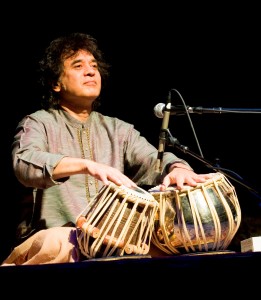
Every Instrument Has a Spirit: An Interview with Tabla Master Zakir Hussain (Part 1)

Tuesday, November 4th, 2008

Zakir Hussain is a world-renowned, Grammy award-winning percussionist, world musician, and master of the tabla, the popular Indian drum. Zakir has amassed a wealth of awards and accolades and has recorded and performed with many of the world's greatest musicians, including Yo Yo Ma, Bela Fleck, George Harrison, and John McLaughlin, just to name a few.

Mr. Hussain met up with RockOm's Trevor Harden and Tom Crenshaw in the tiny mountain community of San Anselmo outside of San Francisco in September. While leisurely strolling through downtown, Zakir shared about the town's rich musical history and the feeling of community that has led many musicians and Hollywood celebrities to make San Anselmo their home. This interview begins about an hour later with a conversation already in progress as Zakir, Trevor, and Tom, settle in for a longer discussion in Zakir's office at Moment! Records. As the RockOm guys share about a concert they caught the night before featuring Bonnie Raitt, Crosby and Nash, Jackson Browne, and others, Zakir reminisces about his past interactions with several of these performers…


Zakir: We'd be all converging at Mickey's [Mickey Hart, The Grateful Dead] ranch in Nevada in '71-'73 for jam sessions. David Crosby would be walking in and Steven Stills would be there and Gracie Slick, everyone would show up and hang out. Some were just sunning naked outside the barn where the studio was; some were just walking in the fields. It was an interesting time.

Tom: Most of my musical interests come from that period, the '60s and early '70s.

Zakir: For me it was a major change because I came from India, which in terms of visibility is a conservative country. Even when people have to step out to go to the store, they have to put on proper clothes. You did not step out in your "jammies." [laughs] Here [in America] you just stepped out whether you were wearing anything or not.

We'd just play music anywhere. This was so unusual for me. [In India] I would have to take a shower, say my proper prayers, light the incense and everything in front of my instrument by the altar, and then sit down to play the drums. Not in jeans or t-shirts, but in proper garb. No shoes, no nothing – just sit down and focus and play the instrument. Here you're around in the sun and you have your drum or guitar in your hand. And you're walking around naked or topless, with a glass of wine or beer in your hand… it was a whole different connection to creativity than what I was used to in India. It took a little getting used to - just to relax. The condition at the [ranch's] swimming pool was that everybody had to be swimming naked - no bathing suits. So I never swam. I just could not relax like that. It just was not in my upbringing.

One thing that was interesting about the creative part of it was that you got to know your music and your instruments intimately. They were not just modes of worship or meditation or yoga. They were also friends, twins, buddies, lovers. There was that whole concept of getting to know your instrument in a different manner so that your mindset changed. So you could relax into your interaction and connection and plug in with your instrument and your music.

Trevor: And you don't feel like you lost anything by taking this more casual approach?

Zakir: No, because I had been practicing day in and day out for hours in front of my teacher and away from my teacher, for hours on end for 16 years before I arrived here. So that was already in there. I was open to suggestions, I was open to the idea of relaxing and allowing a different kind of thinking into music. And I think that helped me in the long run because it was an interesting balance between a connection with the tradition - and what went with that package in terms with your connection with it, your treatment of the instrument, the music, your behavior – and the relaxed part of it, where the instrument had a voice as well. In India, the idea was: here's your instrument, here's the repertoire, learn this, play this repertoire on the instrument and see how you can embellish it, within the required rules and drawn up dos and don'ts.

You arrive here [in America] and you look at the instrument and say, "Okay, so I'm doing this, but what is the instrument capable of? What else can it do?" In other words, let's take it around the corner and see what is possible with the instrument. The instrument wants to speak. It was a kind of a contradiction because we believe in India that every instrument has a spirit. But in setting up parameters to our discipline, we were not allowing that spirit to have a say. The spirit just sat in the instrument, or slept in the instrument, and watched all this stuff being played and improvised on it. But it itself had no say in how it should be done or what else it could be and so on. There's that concept of looking into the instrument, say in a Zen method of meditation on a flower and seeing the whole world in it, that kind of connection into the instrument, where you not only touch the instrument but you do not tell the instrument what to do. You allow the instrument to transmit to you what should be happening and you make a connection that way.

That was the kind of atmosphere here: a sense of wanting to discover, wanting to find more, wanting to see what else is out there. So a three day jam session was not out of the question. The longest I remember was four days – really, four days! We were just playing constantly, there were at least 2 or 3 people playing, keeping the music going and people drifted in and out. I remember waking up, I was in the barn and had fallen asleep. I woke up and Jerry [Garcia] was playing the guitar, and Crosby was on the rhythm guitar, and Mickey was in the corner on the drums. There were other people asleep or relaxing when I woke up… that's what was happening. I woke up and immediately went on the instrument and starting playing. The discovery, the trying to find out, trying to get to "the more," getting the instrument to speak to you, that's a whole different way of looking at creativity which did not exist in India. That's a major lesson I learned and also was a break-out of the old way of praying and meditating and worshiping.

Trevor: You had mentioned the spirit in the instrument; could you elaborate on how Indian spirituality and classical Indian music are intertwined?

Zakir: I have to say that when it comes to playing a concert or performing for a number of people or being on stage, I do not impose the idea of spirituality through music onto the audience. I simply don't do that. For me, it's a very personal thing. My connection to the beings that have gone before, that have touched that instrument before, that have laid their blessings on it, it's just between me and them. And I hope that my connection with them is so strong that an aura of it appears anyway when I'm on the stage and playing and if people are so attuned, will lock into it and feel it the way I'm feeling it. Because my main function as a musician on stage is to entertain. So, I will do that. If I am to seek spiritual enlightenment through music with others, then it will be with my students, my fellow brothers of music who I'm playing with in a room, like the Sufis call "zikir." We will play and it will get to a point where people see the same light at the same time and that magical moment will be arrived at and experienced and the connection will be made between us that will never be broken, ever.

That being said, our great gurus of old have taught us that this music has its roots in divinity. That means that music emerged or was given as a boon to mankind, at least in India, by the gods and goddesses who existed at that time and so have become a constant part of our lives. Like Lord Krishna with his flute, Saraswati with her vina, Lord Shiva with his damaru. If you look through the statues and the paintings of gods and goddesses in their various forms, they all have at least one little instrument with them. So we believe this is a boon, it comes from them, it is a blessing and must be treated as such – this is why you take a shower, you go to the altar, you sit and practice, you do it that way. For great many centuries, the music stayed in the temples. And then, it somehow found its way to the courts and struggled between being a connection to God and an entertainment art form. It kept struggling until 1947 when India achieved independence from Britain and all the principalities were gone. And so now there were no jobs for court musicians anymore. So what do they do? They had to find a way to live so they brought the music to the stage; so Indian music as an entertainment art form is only that old. It really started to find its way in front of the audience, to communicate to them, to interact with them, to connect with them and to simplify things enough for them to be able to understand and attach themselves to the music in the '50s. It is still trying to find a balance between being a spiritual form of music and being an entertainment form of music. The old gurus and masters, they still want to keep themselves connected to that old way of thinking. What the new generation wants to be able to play the music for the sake of playing the music.

But, if you look at me, when I get on the stage to perform my music, whether I'm playing in a night club, in a concert at Golden Gate Park, a big festival outdoors, or anywhere, my preparation towards arriving at that point where I will hit my first note on the instrument is the same as it has always been. That has not changed. I will still go through that whole process of cleansing myself, focusing myself, and putting on my traditional garb. I will not allow shoes on the stage, I will not allow any kind of outside influence. I want to approach my instrument with the idea that I am in the presence of those beings. And then, once I have approached the instrument and established that connection with myself and them and paid my respects to them, then I open up and start to enjoy the music in a more open manner. That's why you find Indian music is very meditative in the beginning. It's within itself, it develops and then it opens up because that whole first part is for the gods, the gurus, or the masters. [You] establish that connection, pay those respects, and then move on.

I have worked with a hell of lot of musicians and have seen them observing and also diligently following the traditional ways of connection. It's the same: they will wear what's required of them, they will get on the stage and they will start in that manner… and then they will boogie [laughs]. We are still in that transitional zone but the connection of each individual musician with the spirits, it's something that I said earlier: when you make that contact and you see that same lighted path and you walk down that path with your fellow brothers and musicians, that contact cannot be severed ever. It's made. That's why I'm playing with Airto Moreira, the late Hamza Al-Din, Mickey Hart – those guys, for the last 30 years. That connection was made! That connection was made with John McLoughlin 34 years ago and it's still there – and with all the other old musicians of India whom I've been working with. And I'm still working with them because that light was seen, that connection made, and it will never be severed.

Click here to see PART TWO of this interview with Zakir Hussain, where he speaks about the spirituality of rhythm and the drum, the blend of Eastern and Western music, and much more.

Discuss this article

Article edited by Andrew Hoogheem

Photography by Susana Millman

The Spiritual Act of Creation

Monday, September 15th, 2008

In a recent interview with the Star-Telegram , The Eagles' frontman Don Henley shared the following about the creative process:

"Creating is a spiritual act, as well - a kind of meditation. A part of my mind is always writing, always processing what I see and hear and feel, even when I seem to be fully engaged in something else. It's what some philosophers have called 'invisible work.' I can't keep from doing it. I believe that every human being has the creative impulse within them, but if it isn't recognized and developed, then dysfunction and unhappiness is the result. I was lucky. I had great parents who encouraged me and helped my pursue my passion, even though it wasn't exactly what they'd expected."
[Don Henley]

YOUR TURN: How in your life have you seen the creative process become "a kind of meditation"? Share with the RockOm community a time in your life when the act of creating - whether it be a song you're writing, a clay piece you're molding or a garden you're planting - seemed to transcend the ordinary and became a spiritual process.

adobe software home best discount prices for full windows 7 ultimate operating system cheap software regcure microsoft office home discount software at discount prices cheap adobe soundbooth cs4 buy adobe dreamweaver cheap buy lotus software minitab software price cheap windows 7 ultimate software windows 7 starter edition cheap easyshare software downloads download norton antivirus 2010 instant again buy microsoft internet keyboard pro buy software faceonbody buy microsoft office 2010 pro plus microsoft buying programs best price on microsoft outlook graphics desktop publishing software download discount adobe illustrator buy used microsoft picture software microsoft office 2007 professional best price buy microsoft office professional plus 2010 buy photoshop cs5 cheap adobe flash software graphics desktop publishing software download buy windows 7 professional 64 bit microsoft vista college discount buy dreamweaver cs5 license best price for microsoft word downloadable digital software discount windows 7 home premium upgrade cheap Adobe Creative Suite 5 Master Collection cheap Creative Suite 5 buy adobe photoshop cs5 online download and get serial # now cheapest price for microsoft office pro adobe acrobat 8 standard discount purchase Adobe CS5 Production online adobe after effects buy adobe education discounts cheap Adobe CS5 Design where to buy Adobe CS5 cheap Creative Suite 5 Design to buy windows 7 cheap Creative Suite 5 Production microsoft government discount microsoft powerpoint 2003 with student discount cheap windows server 2003 download sony vegas pro 10 non profit accounting software prices community health center Adobe Creative Suite 5 Design with discount purchase on line Adobe Creative Suite 5 Production purchase on line Adobe CS5 Design Premium Adobe CS5 Production Premium oem price of Creative Suite 5 cheapest Creative Suite 5 Production Premium Creative Suite 5 Master Collection with cheap price purchase Adobe Creative Suite 5 Design online purchase Adobe CS5 Production on line web store Creative Suite 5 Design Premium best prices on Adobe CS5 purchase online Creative Suite 5 where to buy Adobe Creative Suite 5 buy Creative Suite 5 Master Collection oem buy CS5 Design Premium buy cheap Adobe Creative Suite 5 Production where to buy Creative Suite 5 Web Premium buy Creative Suite 5 Web Premium oem lowest cost Creative Suite 5 Master buy Creative Suite 5 Master online purchase online CS5 Web Premium discount Creative Suite 5 Master purchase Creative Suite 5 Web Premium lowest cost Adobe Creative Suite 5 Web microsoft office+discount windows seven discount for employees where to buy Creative Suite 5 Design Premium symantec discount download dreamweaver cs5 full version download adobe premiere cs4 pro cost of Creative Suite 5 discount microsoft home & student 2010 office 2007 home and student oem adobe photos versions adobe adobe photoshop cs2 downloads adobe essentials 2 ms office suite 2007 office 2007 slo key adobe flash image integrating office 2007 sp1 adobe fllash adobe reader install file buy microsoft office 2003 office 2007 beta activation buy office basic 2007 adobe cs4 plugins adobe lightroom 2 adobe photo effects microsoft office 2007 key gen microsoft office 2007 educator discount download adobe dreamweaver cs3 microsoft office 2007 professional best price buy norton internet security 2010 discount microsoft office pro 2010 microsoft word cheap ca erwin data modeling software cheap microsoft office 2007 plus price buy office 2007 product key replica wathes cheap replica louis vuitton watches ladies replica cartier watches buying microsoft office online buy photoshop software buy photoshop cs4 ms windows software student discount download illustrator cs4 download mp3 software download windows 7 starter edition microsoft office 2007 student discount acrobat 9 pro extended download cheap commercial aluminum windows microsoft office educator discount buy windows 7 ultimate product key online download sony vegas pro 10 dreamweaver buy cheap payroll software software discount prices buy kaspersky internet software uk buy software discount cheap photoshop cs5mac upgrade discount